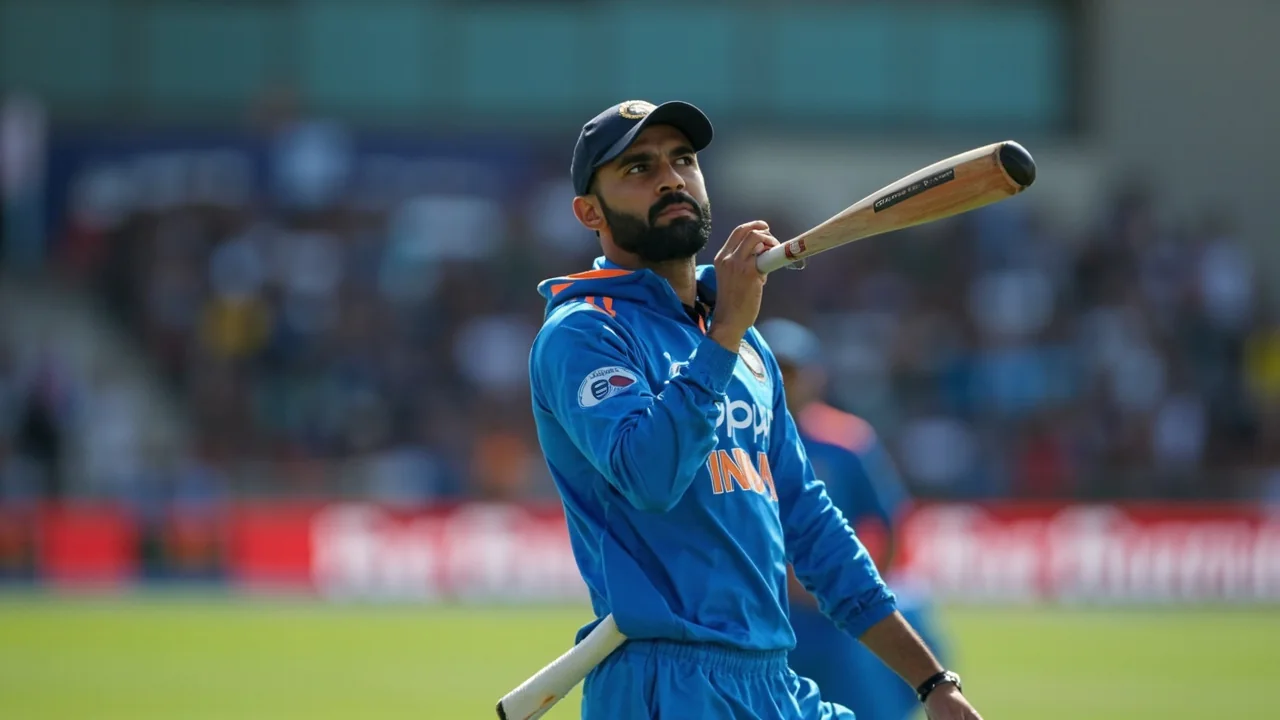
The BCCI has officially laid out Team India men's international home calendar for 2026-27. A media advisory signed by Honorary Secretary Devajit Saikia on 26 March 2026 confirms 22 international matches spread across 17 Indian cities, with four touring sides — West Indies, Sri Lanka, Zimbabwe and Australia — taking on the Senior Men's side between late September 2026 and late March 2027. The package is the heaviest home season the Indian board has staged since the 2023-24 cycle, and the calendar has been deliberately stitched together so that the white-ball rhythm of September and December dovetails with the red-ball centrepiece of January and February.
The structure of the announcement matters as much as the contents. The advisory is dated 26 March 2026, just over four months before the first ball of the West Indies tour is bowled in Trivandrum on 27 September 2026. That gives the BCCI, the broadcasters, the state associations and the four visiting boards a clean run to finalise logistics, accommodation, and the player-availability windows that tend to be the messy part of any home international cycle. It also gives fantasy cricket players on platforms like Exchange22 a long runway to map the season onto the contest calendar, particularly the white-ball leg where ODIs and T20Is stack up across two tight windows before the Border-Gavaskar Trophy takes over the headline slot.
How the season is sequenced
The BCCI has split the 22-match season into four tour blocks. The opening block is the West Indies white-ball tour: three ODIs followed by five T20Is, all crammed into the second half of September and the first fortnight of October 2026. After a roughly six-week pause for domestic cricket and IPL 2027 pre-season planning, Sri Lanka arrive in December for the second white-ball block: three ODIs and three T20Is, played across northern, western and western-Indian venues. Zimbabwe then take the third slot in January 2027 with a compact three-match ODI series, before the Border-Gavaskar Trophy against Australia opens on 21 January 2027 in Nagpur and runs through to March 2027.
Across the four tours, the white-ball formats contribute 14 of the 22 matches — eight T20Is and six ODIs — while the red-ball Border-Gavaskar Trophy accounts for the remaining five. The format balance is consistent with the BCCI's stated preference for keeping T20Is as the primary entertainment vehicle for travelling fans, while reserving the longest format for the marquee bilateral contest. For broadcasters and fantasy operators, the sequencing also creates two distinct peaks: a fast-moving September–October white-ball window, and a slower-burn Test series through February 2027 that will define the season's narrative.
The West Indies tour opens the season
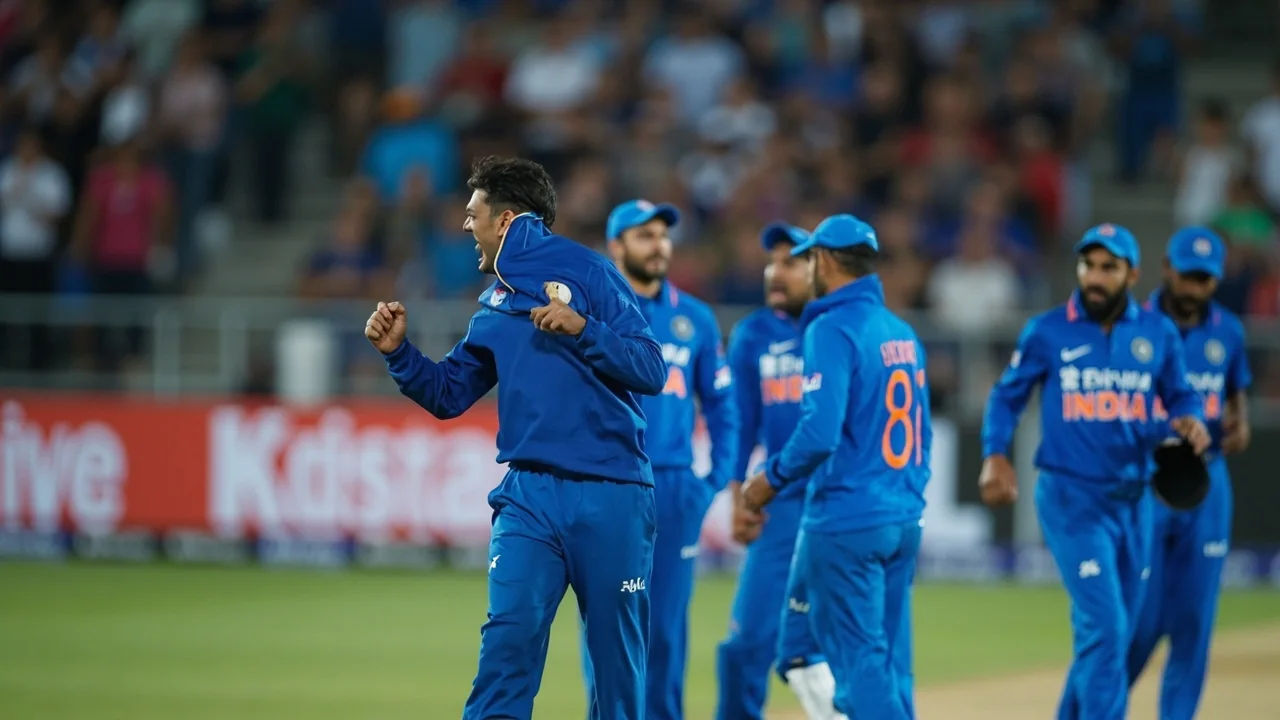
The West Indies block is the first competitive cricket India will play at home after the away commitments of mid-2026. The three-match ODI series is the curtain-raiser, hosted at three venues that have rarely featured in India's white-ball bilateral calendar in recent years. Trivandrum gets the opener, followed by Guwahati and New Chandigarh — a deliberate BCCI move to take international cricket into newer centres rather than the established metro circuit. New Chandigarh, in particular, marks the international debut of the city's new PCA stadium, and the Punjab association has been lobbying for an India fixture since the venue was inaugurated.
The five-match West Indies T20I series that follows is split across five different cities, none of them the obvious metro hubs. Lucknow, Ranchi, Indore, Hyderabad and Bengaluru will host the T20Is in sequence, giving the West Indies a five-city tour of India in the shorter format. For T20 fantasy players tracking workloads, the practical implication is that the West Indies leg will not be front-loaded onto the regular IPL hubs. The BCCI has used the early-season block to spread international cricket to venues that have hosted India matches only intermittently in the last decade, and that policy will continue to shape the calendar through the Sri Lanka leg.
For fantasy players on Exchange22, the West Indies block is a useful early indicator. The squad combinations India picks for the ODIs in Trivandrum, Guwahati and New Chandigarh will set the template for the white-ball group through the rest of the season, and the five-match T20I leg will be the first chance to read how the Indian team management plans to manage all-format players through a congested run-up to the Border-Gavaskar Trophy. The September block is also the first window where senior all-format players will need to be spelled carefully, since the ODI World Cup cycle has historically produced injury spikes in the first two months of any new bilateral season.
Sri Lanka and Zimbabwe fill the December-January window
The second tour block, the Sri Lanka white-ball series, opens in December 2026 and is built around three ODIs and three T20Is. The ODI venues are Delhi, Bengaluru and Ahmedabad; the T20I venues are Rajkot, Cuttack and Pune. The Sri Lanka block is the most familiar-feeling of the four tours in venue terms, since Delhi, Bengaluru, Ahmedabad, Rajkot and Pune all hosted India internationals during the 2023-24 and 2024-25 cycles. Cuttack is the only venue in the Sri Lanka block that has been off the main bilateral circuit for more than two years, and the Odisha capital's return is a small story in itself.
The Zimbabwe block in January 2027 is the shortest of the four: a three-match ODI series with no T20Is attached. The three cities are Kolkata, Hyderabad and Mumbai — the first time India has hosted a Zimbabwe ODI series at this exact venue mix since 2022. For fantasy players, the practical implication is that Zimbabwe will not produce a T20I dataset at all during the home season, and any white-ball fantasy investment in Zimbabwe players will have to be read off the ODI scoresheet. The trade-off is that the series is concentrated into two and a half weeks, which makes it an idealised read for fantasy points.
The Sri Lanka and Zimbabwe tours sit between the West Indies white-ball opener and the Border-Gavaskar Trophy, and that placement matters. December and early January are the months when India's white-ball players will be moving from one format to the next without a clean break, and the BCCI's choice to give the all-format players only the ODI half of the Sri Lanka series and the Zimbabwe ODIs is a deliberate workload-management signal. The senior Indian all-format players will likely rotate through the December block with at least one rest window, and the January Zimbabwe ODIs will be used as a red-ball warm-up for the Test squad ahead of the Nagpur opener.
The Border-Gavaskar Trophy is the centrepiece
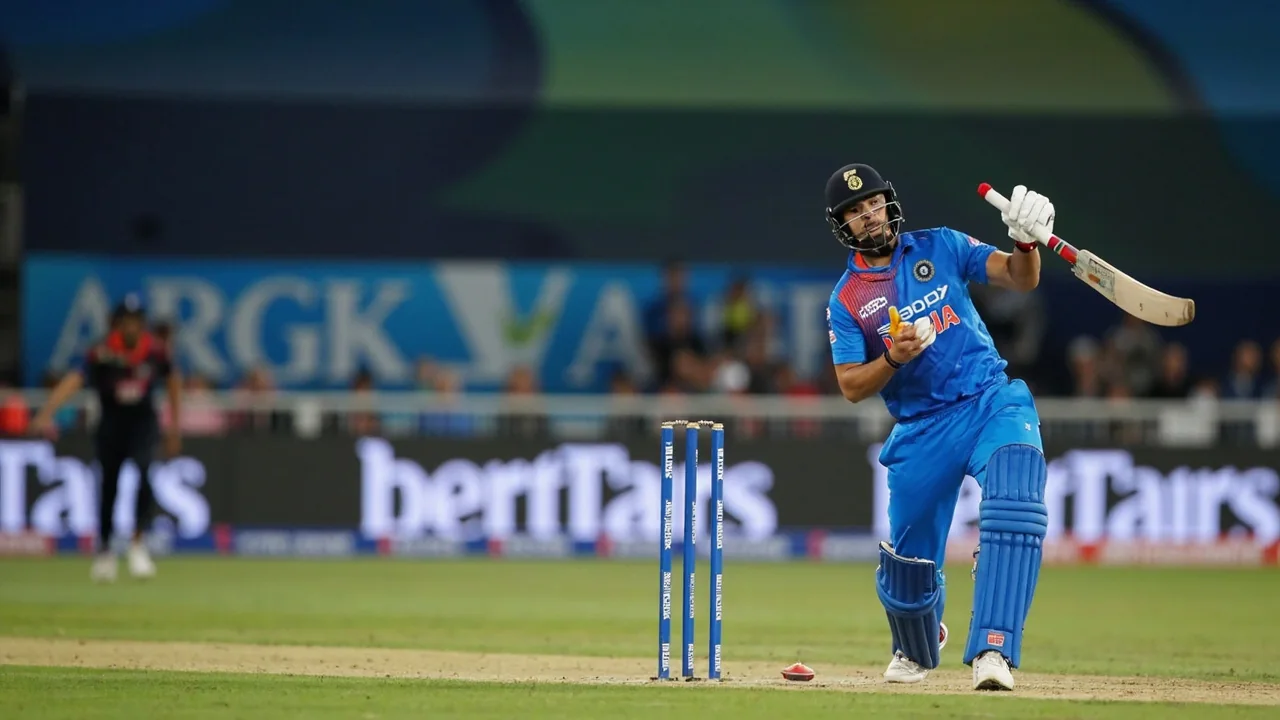
The Border-Gavaskar Trophy is the undoubted centrepiece of the season, and the BCCI's choice of venues for the five-Test series signals how seriously the board is taking the red-ball leg. Nagpur hosts the opener from 21 January 2027, followed by Chennai, Guwahati, Ranchi and Ahmedabad. Five-Test series have been a feature of the India-Australia bilateral since 2023-24, and the BCCI has used the longer format to take Test cricket back into regional centres that have hosted India red-ball cricket only intermittently in recent years.
Guwahati and Ranchi are the two Test venues in the Border-Gavaskar Trophy schedule that have not hosted India-Australia Tests in the last decade. Guwahati last hosted a Test match during the 2022-23 cycle, and Ranchi's only previous Test against Australia came in 2017. The BCCI's logic is straightforward: the longer format needs bigger stands and longer dwell times, and India's recent home Test crowds have shown that the regional centres can deliver attendances comparable to the traditional venues. The selection of Nagpur as the opener is also a familiar venue choice — the VCA Stadium has hosted India Tests regularly since 2009, and the pitches there tend to assist spinners from day three onwards.
The Border-Gavaskar Trophy will run through February and into mid-March 2027, which gives India and Australia a roughly seven-week window to complete the five Tests. For fantasy red-ball players, the practical implication is that the Border-Gavaskar Trophy will be the longest sustained red-ball dataset of the home season, with each Test producing a full five-day match points table. The series is also the only block in the entire 22-match season where Test cricket will be the headline format, which makes the venue choices the most consequential decisions the BCCI has made in the 26 March advisory.
What the 17-city map tells us
The 17-city spread is the broadest venue map the BCCI has used for any single home season since the 2023-24 cycle. The advisory does not break the cities down tour-by-tour, but a careful reading of the four tour blocks shows the BCCI has chosen to use the home season as a vehicle for distributing international cricket more evenly across India. The 22 matches split across 17 cities means an average of 1.29 matches per city, and the BCCI has deliberately sequenced the tours so that the same cities rarely host back-to-back fixtures for the same touring side.
From a broadcasting and attendance standpoint, the spread is a clear signal that the BCCI is using the international season as a development tool for newer centres. Trivandrum, New Chandigarh, Indore and Guwahati are all cities where international cricket has been hosted only intermittently, and the BCCI's choice to allocate high-profile matches across these venues is a deliberate policy of widening the cricket map. The trade-off for fantasy players is that the venue rotation makes travel-day fantasy reads harder to predict, but the broader dataset across more venues is also a richer source of pitch and weather reads for captaincy decisions on Exchange22.
The 17-city map also matters for the Border-Gavaskar Trophy. The five-Test series across Nagpur, Chennai, Guwahati, Ranchi and Ahmedabad gives India the broadest red-ball read of any home series in recent memory, and the venue mix will produce at least three distinct pitch types — the VCA Stadium in Nagpur and the JSCA International Stadium Complex in Ranchi are both spin-friendly venues, the MA Chidambaram Stadium in Chennai tends to assist spinners from day one, the Narendra Modi Stadium in Ahmedabad is the biggest cricket stadium in the world and produces true bounce, and Guwahati's Barsapara Stadium is the only one of the five venues where pace and bounce have historically dominated.
What to watch next
The next concrete checkpoint is the West Indies squad announcement, expected in mid-September 2026. That announcement will confirm which all-format players the Indian team management plans to rotate through the September white-ball block, and whether the senior Test players will be held back from the ODI leg in Trivandrum to keep them fresh for the red-ball cycle. The BCCI's media advisory on 26 March 2026 is a fixture confirmation, not a squad plan, and the squad news will be the first window into how the team management intends to balance workload across the 22-match season.
For fantasy cricket players tracking the Indian international calendar on Exchange22's cricket news desk, the season's headline implications are simple. The 14 white-ball matches between 27 September 2026 and mid-January 2027 will define the early-season fantasy landscape, with the West Indies T20I series in five cities and the Sri Lanka white-ball block in December as the two most concentrated fantasy windows. The Border-Gavaskar Trophy from 21 January 2027 will then take over the headline slot for seven weeks, and the Nagpur opener is the most consequential single match of the season for fantasy Test-read purposes.