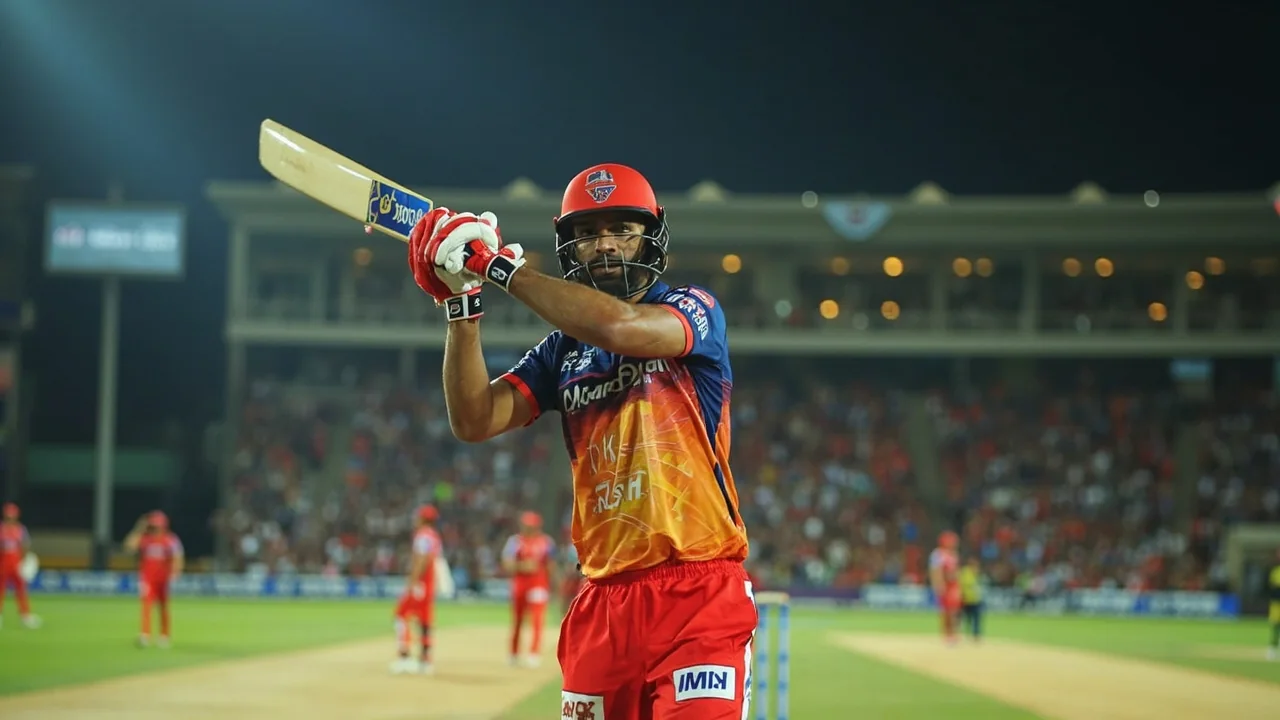
Wasim Jaffer has spent most of his post-retirement career talking about the technical side of batting, which is what makes his latest assessment of Vaibhav Sooryavanshi read more like a character note than a coaching tip. The 15-year-old left-hander had just walked away with the Player of the Series award from India's tour of Zimbabwe, having scored 151 runs across three matches with two half-centuries — including an innings of 81 — and Jaffer's view is that the best thing the Indian team can do is leave his natural approach exactly where it is.
Jaffer's read on the Zimbabwe series
Jaffer broke his assessment into two parts. The first was the headline numbers: 151 runs in three innings, the Player-of-the-Series trophy, and two innings that were, in his words, "outstanding." The second, and the part he lingered on, was how Sooryavanshi got those runs. The 15-year-old did not grind his way into form. He attacked from ball one, kept going for the big shots even when the bowler adjusted his length, and accepted the consequence when the catch eventually arrived. On his YouTube channel, Jaffer framed that approach as the single biggest positive from the tour: "One of the biggest positives has been him scoring runs. We were already expecting Vaibhav to perform in international cricket, but I think these two innings will boost his confidence even further."
The point Jaffer is making is not a stats argument. India's support staff already know the boy can score quickly; what they want to know is whether the technique survives a fifth T20I, a seventh, a tenth, and Jaffer's answer after Zimbabwe is that the head has held up even when the milestone has not. In the third T20I, Sooryavanshi looked set for a maiden international hundred before a brilliant catch ended the innings short. Jaffer called that catch "absolutely brilliant" and used the moment to underline the rest of the knock. The dismissal was the cost of the approach, not a failure of it.
Why the IPL 2026 knockouts matter to the argument
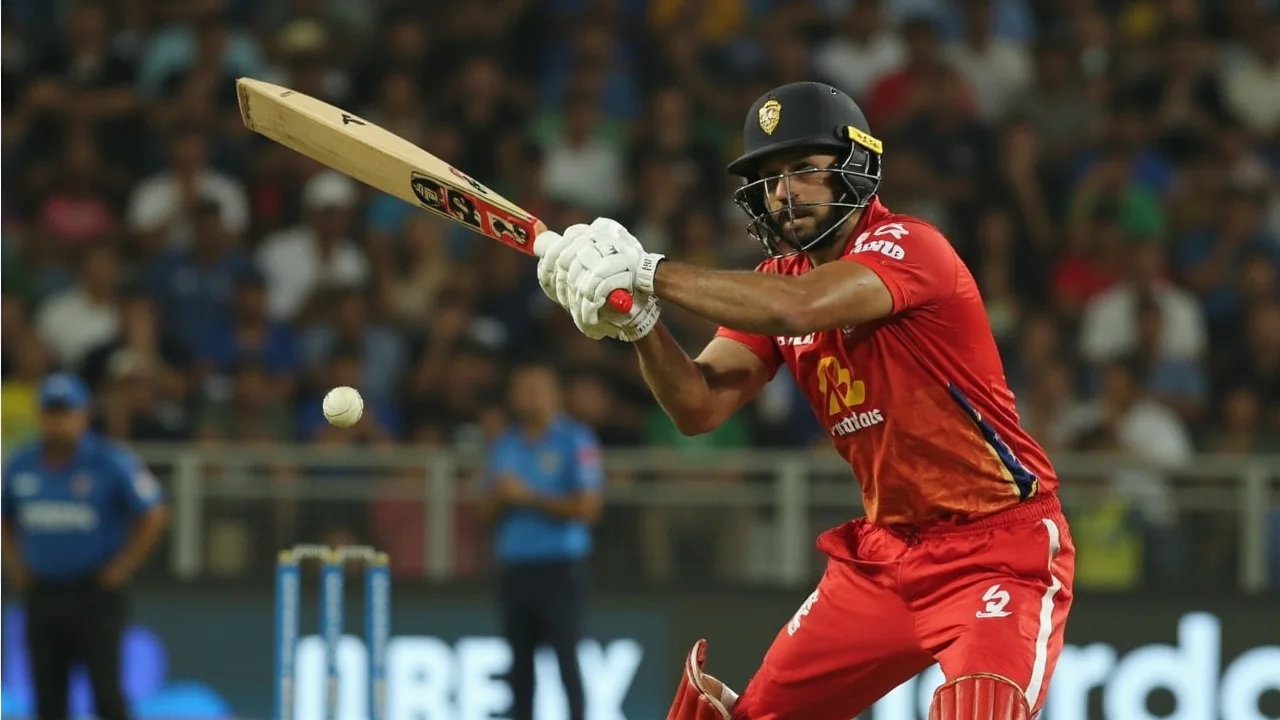
The more interesting section of Jaffer's assessment is the one that pulls the IPL 2026 playoffs back into the conversation. Sooryavanshi, who turned 15 during the league stage, played in the knockouts and on two separate occasions walked out in the 90s without taking his team past the three-figure mark. Both times, the boy could have taken a single, manipulated the strike, and trusted himself to nudge the next ball into a gap. He did not. Both times, he went for the boundary. Both times, the boundary was not there.
Jaffer read those dismissals as confirmation of the same instinct that won him Player of the Series in Zimbabwe. "He plays absolutely fearless cricket," Jaffer said. "We saw him in the IPL knockouts as well, where he missed out on two centuries after getting into the 90s. He could have easily played a few more balls and taken singles, but that's just not his nature. That's not how he plays the game, and that's something to like about him." For most coaches that would be a problem statement. For Jaffer, it is the reason behind the success — a phrase he used twice in the same assessment.
The framing matters because it changes how India's support staff is likely to brief Sooryavanshi ahead of the next phase of his career. Senior teams often try to smooth out a teenager's game before pushing him back into the deeper formats; that smoothing usually means trading a small amount of attacking intent for a small amount of control. Jaffer is essentially arguing against the smoothing. The fearlessness, in his reading, is what got the boy to the senior side, kept him there through the England T20Is, and is what made him the most dangerous Indian batter on the field in Harare.
What the data actually shows
Put the two seasons next to each other and the pattern becomes harder to dismiss as a small-sample story. In IPL 2026, Sooryavanshi played in the league stage for his franchise and into the knockouts; the franchise had enough faith in him to keep him in the XI when the format tightened, and he delivered enough impact to reach the 90s in two knockout innings. In the three-match T20I series in Zimbabwe that followed, he aggregated 151 runs, registered two half-centuries, and was named Player of the Series. Across both windows, the catch that ended the chase for a personal hundred came off a brilliant fielding effort rather than a mistimed shot.
That is the supporting evidence behind Jaffer's read. A 15-year-old who hits the 90s twice in IPL knockouts and reaches fifty twice in his next senior series, with the only thing preventing him from a maiden senior hundred being a one-handed grab at the rope, has an approach that is working. The risk of coaching the fearlessness out of him is that the next milestone he reaches is a smaller number than the one he was threatening when the catch was taken. Indian cricket has produced plenty of technically perfect teenagers who peaked at U-19 level and never converted; the better bet with Sooryavanshi is to let the instinct carry the technique, not the other way round.
How this maps to the next phase of the calendar
The next window for Sooryavanshi is the India A multi-day series scheduled for late August 2026, which doubles as a selection checkpoint ahead of the senior home season. Bowlers at that level will test him in a format where the boundary count is lower and the strike-rotation requirement is higher. If Jaffer is right that the fearlessness is the reason behind the success rather than a temporary side effect of youth, Sooryavanshi will find a way to score without losing the shape of his innings. If he is wrong, the multi-day series is where the technique will need an honest update. Either way, the most useful next question for India's batting group is whether the same shots work at a slightly slower tempo.
For fantasy players tracking the IPL 2026 squad build and the senior team pipeline, the read-through is simpler. Sooryavanshi is now firmly on the T20I radar, the England tour gave him three caps and a benchmark for what senior pace looks like, and the Zimbabwe series gave him the cap numbers to back up the IPL reputation. On Exchange22, that combination tends to push a player's fantasy salary in two directions at once: captaincy odds rise with the form line, but volatility also rises because the milestone-misses inflate the dot-ball count when the boundary isn't there. The trade is not new — Kohli, Pant, and Abhishek Sharma have all spent time at the same junction — but Sooryavanshi is the youngest India batter to sit at it with a Player-of-the-Series trophy already on the shelf.
What Jaffer is really saying
The most quoted line from Jaffer's YouTube assessment is the one about the scoreboard. "It's really nice to see that the pressure of the scoreboard or individual milestones doesn't get into his head," he said. "Even today, he played some excellent shots, but unfortunately, the catch that dismissed him was absolutely brilliant." That is the line that will travel on the broadcast clips, and it is the line most fantasy and cricket audiences will remember by the end of the week.
But the operational sentence is the one that comes before it. "Of course, we all want him to score big hundreds, but somehow that's not his style. He keeps playing his shots and goes for the big hits, and that's also the reason behind his success." Read together, the two sentences make a cleaner argument than either does alone. India's 15-year-old is not missing milestones because he cannot read the game; he is missing milestones because the game he wants to play does not let him pick his spots. For now, the Indian team's view, as Jaffer lays it out, is that the spots will come. The job is to keep him in the side until they do.
Why this matters for the IPL 2026 follow-up cycle
Sooryavanshi returns to the India A setup later this month before the senior home season begins, which means the next time a Jaffer-style assessment lands in print it will probably be about his multi-day numbers rather than his T20I strike rate. The IPL 2026 season gave him his first senior reference point: a record-breaking league campaign, two 90s in knockouts, and a franchise that kept him in the XI when other teams would have rotated. The Zimbabwe tour added the second reference point: three T20Is in the bank and the Player-of-the-Series trophy. The third reference point — what the India A series and the senior home season look like — is the one that will decide whether the fearlessness Jaffer is describing becomes the story of India's next T20I rebuild or a more temporary feature of a teenage year.
For the cricket news desk, the headline remains the same as the one Jaffer delivered on his channel. Milestones, in Sooryavanshi's case, are a side effect of his batting rather than a target of it. That is a fairly unusual thing to write about a 15-year-old who has already played in an IPL knockout, and it is the reason the original interview will keep being quoted through the rest of the summer.
Frequently asked questions
What did Wasim Jaffer say about Vaibhav Sooryavanshi after the Zimbabwe series?
Jaffer said that expecting Sooryavanshi to change his natural attacking approach would take away the very quality that makes him special, and pointed to two missed 90s in the IPL 2026 knockouts as evidence that scoreboard pressure and individual milestones do not get into the 15-year-old's head.
How many runs did Sooryavanshi score in the Zimbabwe series?
Sooryavanshi finished the three-match Zimbabwe series with 151 runs and was named Player of the Series, including two half-centuries, one of them an innings of 81.
Why did Jaffer bring up the IPL 2026 knockouts in his assessment?
Jaffer used the IPL 2026 playoffs to show that Sooryavanshi reached the 90s twice in the knockouts but missed both centuries because he kept playing attacking shots instead of taking singles, which he read as proof that the teenager is not obsessed with milestones.
How old is Vaibhav Sooryavanshi?
The Hindustan Times report identifies Sooryavanshi as 15 years old when discussing his IPL 2026 playoff performances, which makes him one of the youngest players to feature in an IPL knockout phase.
Where does Sooryavanshi play in the IPL?
Sooryavanshi came into senior international cricket through his record-breaking IPL campaign and was promoted to India's T20I squad after the league stage, playing three T20Is in England after not appearing on the Ireland tour.
Where can I read the original interview?
The full quote is from Wasim Jaffer's YouTube channel, cited in the Hindustan Times cricket report dated 27 July 2026 at 11:22 AM IST. The original Hindustan Times article carries the audio excerpt and the match context.