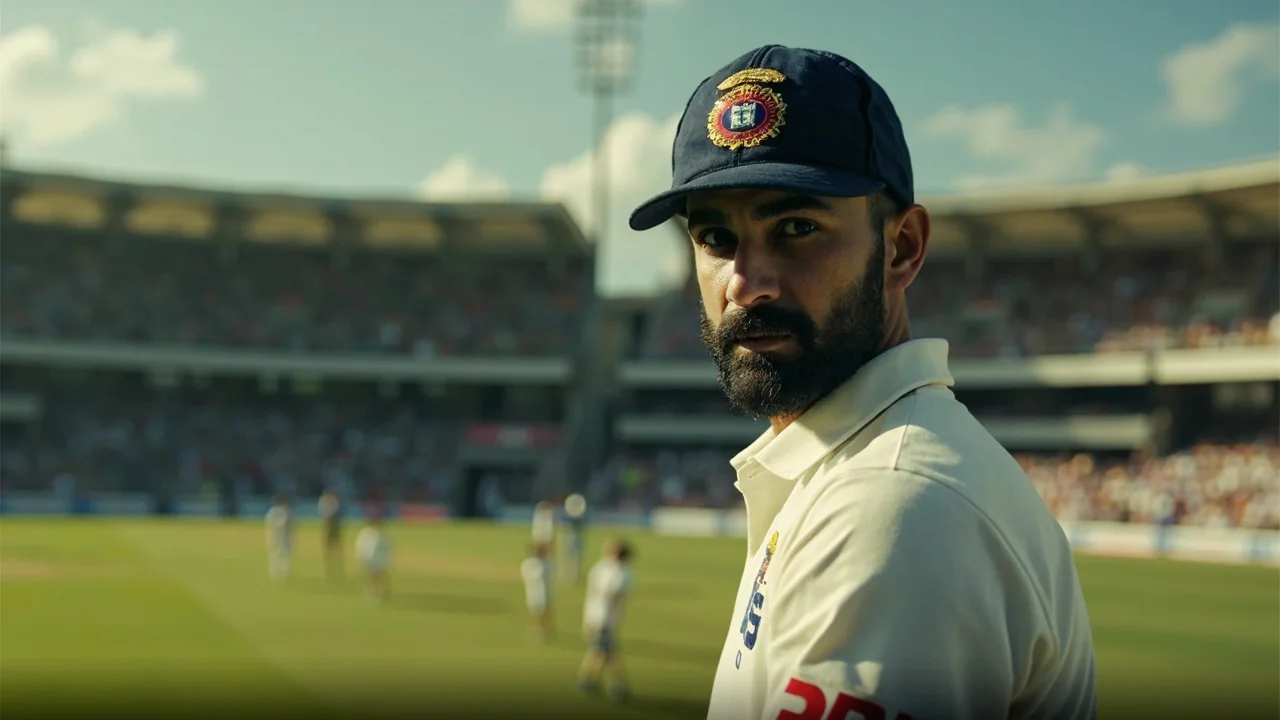
Few stories in Indian cricket travel from a railway platform to a Test dressing room as cleanly as this one. Ajinkya Rahane, now a senior India batter and a long-time IPL captain, used a BBC Sport conversation published on 27 July 2026 to revisit the morning a seven-year-old boy stepped onto a peak-hour Mumbai local with a kit bag taller than himself. The lesson he drew was not about batting. It was about why he kept playing once the easy part was over.
The commute that started it
Rahane grew up in a middle-class Maharashtrian household where cricket was a daily errand rather than a scheduled appointment. His father worked in an office job in Mumbai. Coaching happened across the suburban network. The arrangement had always worked on the simple understanding that an adult would escort the child to the ground, see him into a session, and return home in time for school pick-up the other way.
That understanding broke on a single working day. Rahane told BBC Sport that on the first day of a fresh practice block, his father dropped him at the station and then had to turn around and go back to the office to take an unpaid day off. It was not the first time his father had done this. The difference was that, this time, the family could not afford to repeat it. The following morning, his father told him he would have to take the train on his own.
For a seven-year-old in peak-hour Mumbai, “on his own” meant walking to the platform, finding the right slow service, getting into a compartment heavy with office commuters, balancing a kit bag on his shoulder, and staying awake through a journey that could run close to an hour each way before the practice even began. Rahane’s tone in the interview is not mournful. He presents it as a family rule that taught him how to travel the city and how to take responsibility for his own routine. The hardship, he implies, was part of the brief.
The single detail that makes the story more than a routine memoir is the one his father kept from him for the next half-decade.
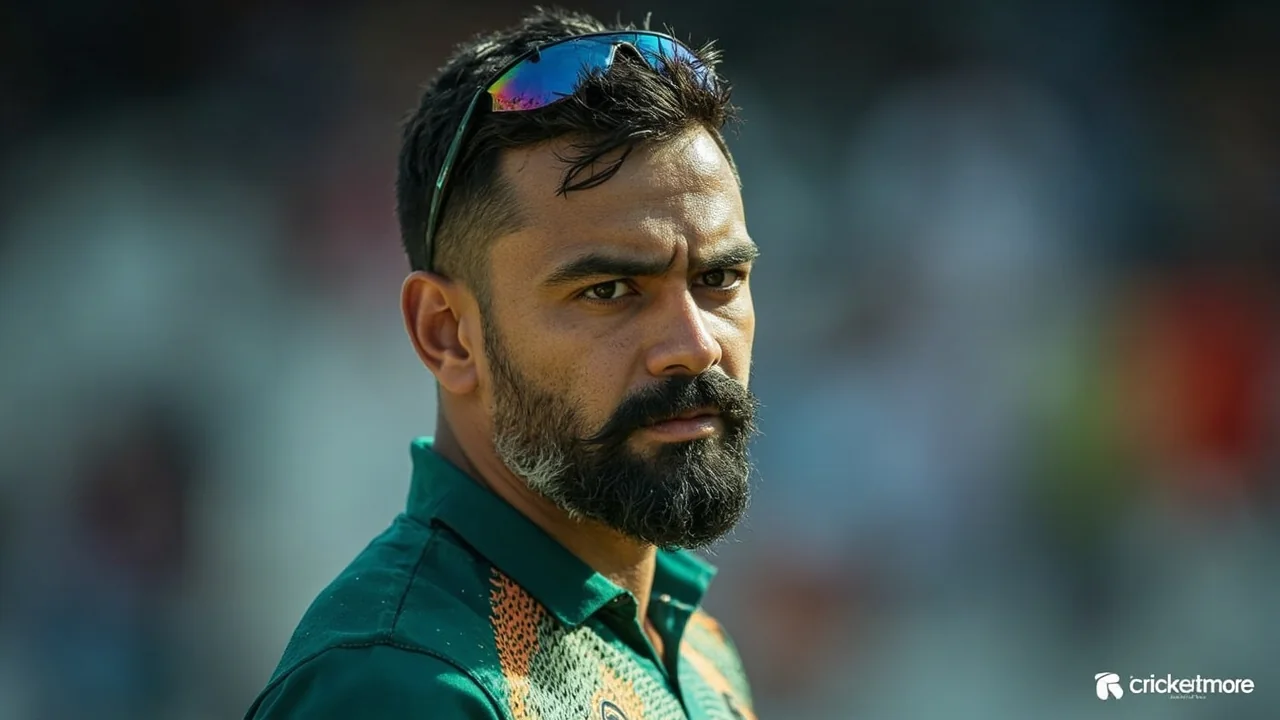
The revelation, five or six years later
Asked by BBC Sport what changed once he became a senior professional, Rahane explained the conversation that altered his self-image. About five or six years after those first solo commutes, his father sat him down and admitted that on those early mornings he had not actually been at the office. He had been at the station too, watching. The father had travelled in a separate compartment on the same train, kept his eyes on Rahane through the crowd, and followed him all the way to the platform at the practice end. Only when the boy was safely on the ground did the father board a return service and head back to work.
The interview text Rahane offers is short and quotable: “That’s the time I decided, whatever I do from here on, whether I play for my state or my country, I’ll do it for my parents and that motivation, that inspiration, always kept me going.” The point of the quote is not the sacrifice itself — Indian cricket is full of stories of parents funding and chaperoning their children’s careers on modest incomes. The point is the silence. The father never told the boy at the time. He let the child believe the lesson was about discipline, while quietly protecting him from any danger the lesson might bring with it.
For Rahane, that revelation acted as a hinge. The years after — Mumbai under-age cricket, the Maharashtra move, the India U-19 call-up, the first-class grind at Mumbai, the IPL contract with Kolkata Knight Riders and then Rajasthan Royals, the Test cap, the away-Test runs in places like Johannesburg and Lord’s — were no longer his private ambition. They became a debt he owed to two people who had been on the same train as him when he thought he was on his own.
What this tells us about cricket careers built off the field
Cricket journalism in India tends to focus on the visible inputs of a playing career — the academy, the age-group runs, the IPL auction number, the central contract. Rahane’s story underlines a quieter ledger. A child’s daily commute, an office worker’s unpaid leave, a separate-compartment shadow, a kit bag that travels on a slow local at 5.45 a.m. — none of these appear in any official record, and yet any one of them is enough to derail a career if the family behind it runs out of patience, money or energy.
This is also why Rahane’s framing matters. He is not presenting the train rides as poverty. He is presenting them as a contract: his parents gave him the platform and the discipline, and he would give them the runs. That is a clean trade to put on a record before any team selection meeting. It also explains why Rahane has long been one of the more disciplined travellers on India’s team sheet — he arrives early, settles in quickly, and reads the match situation before broadcasters have finished the introduction. The early-morning commuter’s habit of planning the next transfer before the doors open does not leave a person easily.
For young Indian cricketers who come through the academy pipeline, the story is a useful reminder that the senior dressing room contains a working-class memory even when the surnames do not show it on television. Mumbai’s suburban railway has produced a long list of professional cricketers, footballers and athletes, not because the city encourages sport, but because the city forces children to navigate it on their own from a young age.
Why Rahane is still a story worth telling in 2026
Rahane is no longer the next-in-line batter he was a decade ago. He is a senior India player, a multi-format IPL figure, a former captain, and the kind of dressing-room presence that selectors want around a young top order. That is partly why a BBC Sport interview about a childhood commute reads differently in 2026 than it would have in 2013. The lesson has stopped being about a debut and started being about a model: how do you keep a senior professional motivated across a long career when the marginal financial gain of another season is no longer the point?
The answer Rahane keeps returning to is not money or selection. It is the silent figure in the next compartment. He told BBC Sport that whenever he walks out to bat, the memory of that morning commute is part of the routine. The image does the work that a sports psychologist might otherwise have to do with a younger player: it converts the daily grind into a promise kept.
The interview is also a useful reminder of how thin the line is between a working anecdote and a public story. The father never wanted the second compartment to become news. The family lived with the secret for years. The moment the son chose to tell the story on a global platform was the moment the private ledger went into the public archive. That is a deliberate choice, and it tells the BBC audience as much about Rahane’s relationship with his own past as it does about the original journey.
How the interview landed
The IANS-syndicated version of the BBC Sport interview was carried by Cricketnmore on 27 July 2026 at 02:35 PM IST, with a clean summary of the original audio. The exchange22india.com cricket news desk is following the story for two reasons beyond the human detail. First, Rahane remains an active international cricketer through the 2026 home season, and his public framing of motivation tends to filter into how younger players in the India dressing room speak about their own careers. Second, the broadcast interview is one of the more candid childhood accounts any current India cricketer has given on a non-Indian platform in recent years, which makes it useful background reading ahead of any long-form series this winter.
The relevant facts are these. Rahane was seven when the train commute began. The father’s first drop cost him unpaid leave. The next day, the boy travelled alone with his kit bag. Five or six years later, the father told him he had been following from another compartment every morning. Rahane told BBC Sport that the moment of that disclosure was when he decided to play for his parents. The Cricketnmore story is bylined to IANS News and dated 27 July 2026 · 02:35 PM. No performance metrics, contract details or career numbers were attached to the syndicated release; the story is a personal interview, not a season update.
What to watch next
The next public touchpoint is the India A multi-day series in late August 2026, where Rahane is expected to be part of the batting group ahead of the senior home season. The next interview window is the BCCI press briefing scheduled for the week of the squad announcement. Any India selection press conference that follows will likely carry one or two questions about the BBC interview, given how widely the audio was clipped by Indian broadcasters in the 24 hours after publication.
For readers who want the underlying piece in full, the original BBC Sport interview is the primary record. The Cricketnmore summary is a faithful IANS-syndicated version; it reproduces the relevant direct quotes, the order of the anecdote, and the timing of the revelation. Beyond that, the story is best read as a portrait of an early-morning city, a working family, and a boy who thought he was alone until he realised he never had been.
Frequently asked questions
What did Ajinkya Rahane say on BBC Sport about his childhood cricket commute?
Rahane said that at age seven his father once took unpaid leave from his office to drop him at cricket practice, and that the next day his father told him he would have to travel alone on Mumbai local trains during early-morning peak hours carrying his own kit bag.
When did Rahane learn his father had been following him on the train?
According to the BBC Sport conversation, Rahane learnt about five or six years later that on those early commutes his father had actually been following him from another compartment to make sure he reached the station safely.
How did Rahane describe the impact of that revelation?
Rahane said the moment he learnt the truth was when he decided that whatever he did next, whether playing for his state or for India, he would do it for his parents, and that the motivation kept him going.
Where was this interview originally published?
The interview was carried by BBC Sport and syndicated by IANS News; Cricketnmore published the syndicated story on 27 July 2026.
Is Rahane still playing competitive cricket in 2026?
Rahane remains a contracted India and IPL cricketer in the 2026 season, and continues to be active across domestic and franchise formats.