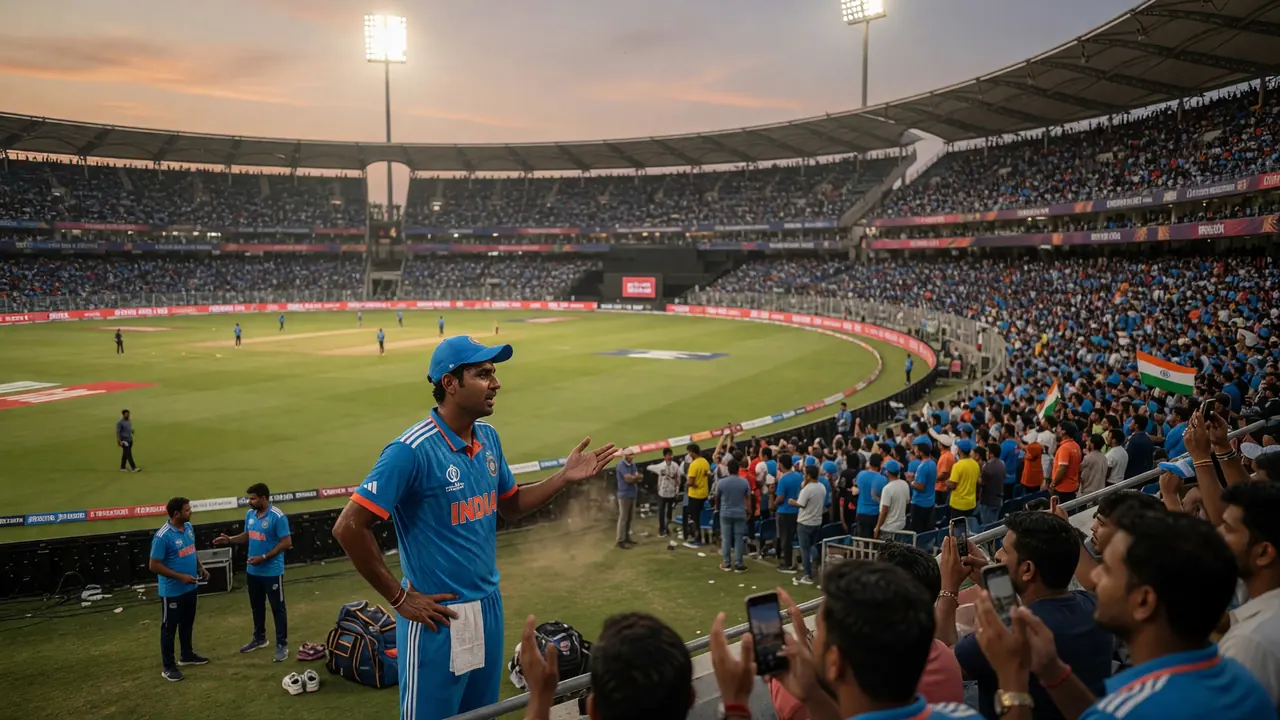
Bhuvneshwar Kumar used a Sunday appearance on the RCB Podcast to redraw the terms of his own career. Fresh from helping Royal Challengers Bengaluru win IPL 2026, and after finishing the league with 28 wickets in 16 matches, the 36-year-old said a Team India recall is no longer the engine that drives him. He has, in his own framing, made peace with life outside the Indian side he last represented in late 2022.
The timing mattered as much as the message. Title nights usually invite talk of unfinished international business. Kumar steered the conversation the other way. He still bowls in the IPL and still turns out in domestic cricket, including the UP T20 League, but he described those appearances as work done for love of the game and for match fitness, not as a campaign to reopen selection doors. Recovery breaks, he said, are part of the same plan.
For Indian fantasy and franchise readers who still price Kumar as a high-skill seam option, the interview supplies a clearer personal baseline than any auction rumour. The numbers from IPL 2026 remain elite. The motivation behind them has shifted from national recall to craft, fitness and enjoyment.
What Kumar said about selection and peace of mind
Kumar’s central line was direct. A national recall is no longer his primary driving force. He has settled into a professional life that does not orbit the Indian dressing room. That is not the same as retirement theatre. He still competes at the top of the domestic and franchise calendar. It is a statement about priority order: the blue jersey is no longer the daily north star.
He also closed a familiar emotional loop. There is, he said, no regret about the transition away from being a core India player. The last India appearance sits in late 2022. The career ledger behind that date is substantial — 21 Tests, 121 ODIs and 87 T20Is — and Kumar treated those figures as completed chapters rather than unfinished arguments with selectors.
Family life, in his telling, protects that peace. Selection talk is kept out of the home environment. That detail is easy to skip past, yet it explains how a senior seamer can deliver a title-winning IPL season without turning every net session into a national-trial audition. The boundary between work and household is deliberate, and he credited that environment for keeping cricket selection noise outside the front door.
The IPL 2026 body of work behind the interview
Context for the podcast was a championship campaign, not a farewell tour. Kumar was part of the Royal Challengers Bengaluru side that won IPL 2026. Across 16 matches he took 28 wickets. In franchise terms, that is a full-season workload with a strike return that keeps him on every shortlist for powerplay overs, change-ups and death plans.
Those 28 wickets also frame the tone of his comments. Players who under-deliver often speak about hunger and second chances. Kumar spoke after a title and a heavy personal tally. The calm about India selection did not come from a dry season. It came from a seamer who had just done exactly what franchises pay him to do: take wickets across a long league and finish on the winning side.
Readers tracking IPL 2026 fixtures, squads and form notes will already have Kumar’s season on the scoreboard. The podcast adds the personal layer those tables cannot show. Form remains high. Ambition has been re-sorted. Availability for franchise cricket is not being presented as a bridge back into the national side; it is being presented as the main stage itself.
Why he still bowls in the IPL and the UP T20 League
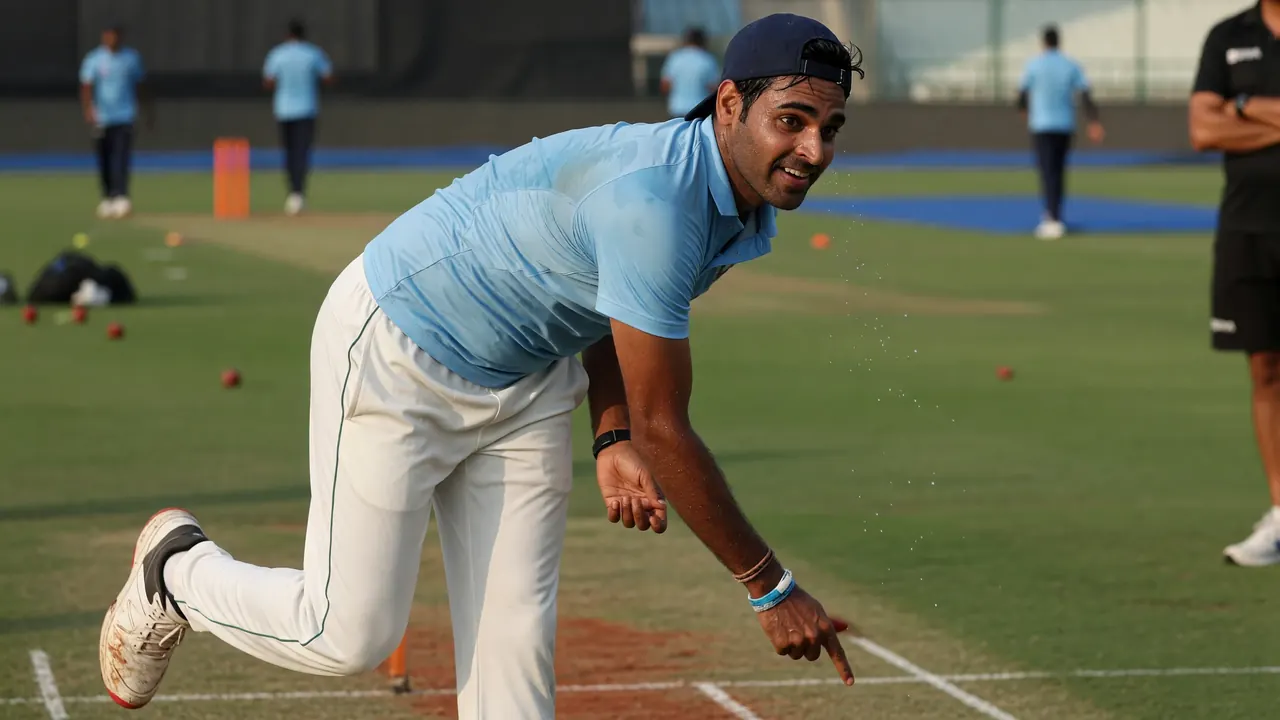
Kumar did not describe a retreat from competitive cricket. He described a narrower reason for staying in it. He plays the IPL and domestic cricket, including the UP T20 League, because he loves the game. Match fitness is the second half of that answer. The schedule, he indicated, still includes recovery breaks rather than a continuous chase of every available fixture.
That combination — love of the contest plus managed fitness — is a practical template for a 36-year-old seamer. Swing and cutters do not survive endless overload. By pairing competitive overs with planned rest, Kumar keeps the skill set match-ready without turning every month into a selection trial. The UP T20 League sits inside that domestic rhythm, not as a side project but as another place to stay sharp between franchise blocks.
For fantasy desks, the useful distinction is motive versus minutes. Motive has changed. Minutes have not vanished. A bowler who is still taking 28 IPL wickets while openly de-prioritising India recall is still a high-leverage pick when the venue and match-up suit new-ball swing or clever slower balls. The interview simply removes the false narrative that every strong IPL spell is coded as a national comeback statement.
India caps, late-2022 exit and the completed ledger
Kumar’s international file is long enough that the late-2022 cutoff needs no embellishment. Twenty-one Tests, 121 ODIs and 87 T20Is cover the years when he was a regular blue-jersey option across formats, especially with the new ball in white-ball cricket. The podcast did not reopen selection debates about who replaced him or which series might still fit. It accepted the ledger as written.
That acceptance is the editorial core of the interview. Many senior players keep a public door ajar. Kumar’s language closed the motivational door even if a future selector could, in theory, still dial a phone. He is not campaigning. He is not nursing a grievance. He is bowling for a franchise that just won a title and for domestic sides that keep him honest between bigger stages.
The age marker — 36 — belongs in the same paragraph as the 28 wickets. Longevity stories usually lean on hunger for one more India tour. Kumar’s version leans on craft maintenance. The body of work in IPL 2026 shows the craft is intact. The podcast shows the emotional target has moved.
How family boundaries support the transition
Kumar’s note about home life was brief and revealing. Selection chatter stays outside the family environment. In practical terms, that means the daily conversation after training is not a referendum on national chances. For a player who spent years as a core India seamer, that boundary is a form of career management as real as workload charts.
He tied that environment to the absence of regret. Transition away from the national core can leave public figures performing disappointment for cameras. Kumar’s account was flatter and more settled. The family rule keeps cricket politics from colonising private space; the professional calendar still supplies competitive cricket; the emotional result is a seamer who can discuss India without sounding unfinished.
None of that requires readers to psychoanalyse the dressing room. It is enough to record what he put on tape: peace with life outside the Indian team, no regret about the transition, and a home setting that refuses to turn every headline into dinner-table selection theatre.
Kumar on India’s pace evolution, Kohli and Shastri
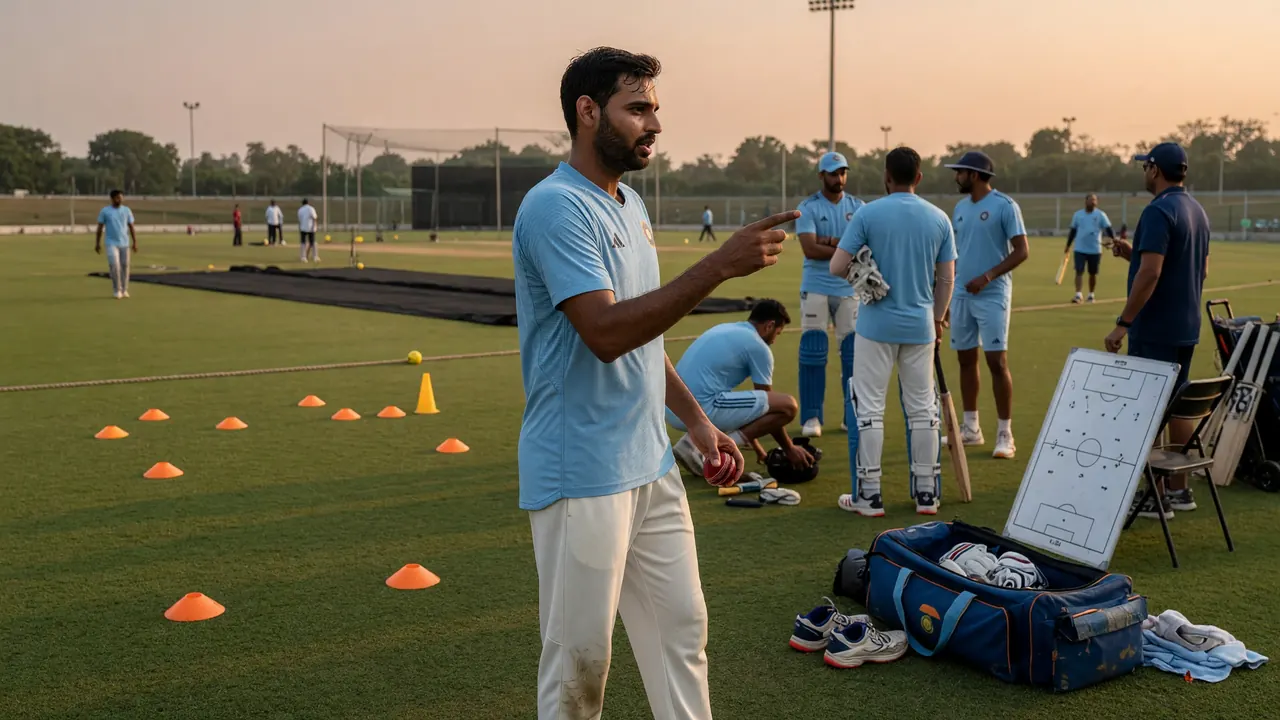
The interview was not only autobiographical. Kumar also offered a short history of how Indian pace bowling changed around him. He credited the IPL, together with Virat Kohli and Ravi Shastri’s vision, for helping that evolution. One concrete strand he named was the willingness to prepare home Tests on pace-friendly pitches before overseas tours — a planning choice that treated seam and bounce as skills to be practised in India, not merely endured abroad.
That reading matches the arc many watchers already associate with the late 2010s: franchise cricket raising the volume of high-intensity overs for quicks, and a national leadership group asking red-ball surfaces to reward pace rather than only spin attrition. Kumar did not present himself as the sole author of that shift. He placed the IPL ecosystem and the Kohli–Shastri planning lens as joint drivers of a culture in which Indian seamers expected to operate on livelier tracks at home as preparation for tougher tours.
For a bowler whose own reputation was built on swing and control, the endorsement is notable. He is not arguing that India abandoned spin. He is arguing that pace preparation became more intentional, and that franchise cricket supplied the weekly laboratory. The IPL title he has just won sits inside that same laboratory — high stakes, short formats, constant tactical adjustment — even if his personal goal is no longer a national recall.
Meerut roots and the Praveen Kumar apprenticeship
Kumar also reached further back than the IPL. He and Praveen Kumar, he said, came from the same Meerut academy. Watching Kumar, along with coaches and seniors at that academy, shaped the bowling fundamentals he still uses. The remark is less nostalgia than technical attribution. Swing shape, seam presentation and the patience to bowl a plan are skills absorbed by observation as much as by net drills.
Meerut’s pace pipeline has long been part of Indian cricket’s internal map. By naming Praveen Kumar specifically, Bhuvneshwar placed his own method in a local line rather than in a generic talent-story. The fundamentals he still trusts — the ones that produced 28 wickets in a title season at 36 — were, on his account, formed by watching a senior from the same academy and by absorbing coaching detail around that example.
That continuity also softens the “post-India” label. Leaving the national core did not mean abandoning the craft school that made him selectable in the first place. The same fundamentals travel into RCB plans and into UP T20 League spells. The audience for those fundamentals has changed; the mechanics, he suggests, have not needed reinvention.
What the comments mean for franchise and fantasy readers
Strip the podcast to operational facts and the checklist is short. Kumar remains an IPL-title seamer with 28 wickets from 16 matches in 2026. He will keep playing franchise and domestic cricket, including the UP T20 League, for enjoyment and fitness, with recovery windows. He is 36, last played for India in late 2022, and no longer treats a recall as his main driver. Family life is deliberately insulated from selection talk. He sees the IPL and the Kohli–Shastri era as forces that improved India’s pace culture, including pace-friendly home Test preparation. His own basics still trace to a Meerut academy shared with Praveen Kumar.
Fantasy and form readers should separate role from narrative. Role: new-ball and middle-phase seam option with proven IPL volume. Narrative: not a comeback campaign. Pricing him as if every spell is an India audition overstates the personal stakes he himself rejected. Pricing him as a spent force understates a 28-wicket title season. The honest middle is a senior specialist who is still match-fit, still wicket-taking, and newly explicit about why he continues.
Franchise management language often hides behind “hunger” and “unfinished business.” Kumar’s version is plainer. He loves bowling. He wants to stay fit. He is at peace outside the national side. After a championship with Royal Challengers Bengaluru, that plainness is the news: the performance is current, the ambition has been reordered, and the next overs he bowls will be for the craft and the contest rather than for a selector’s notebook.
Where the story stands after the RCB Podcast
Sunday’s podcast episode did not announce a retirement and did not float a return timeline. It fixed a motivation statement against a championship backdrop. Bhuvneshwar Kumar leaves the IPL 2026 season as a title winner with 28 wickets, a closed emotional file on core India selection, and an open calendar for IPL and domestic cricket managed with recovery breaks. The Meerut fundamentals and the broader pace-culture story he sketched supply the longer arc; the 16-match wicket haul supplies the present tense.
Anyone following Royal Challengers Bengaluru’s post-title cycle, or simply weighing seam options for the next franchise block, can treat those points as the verified ceiling from this interview cycle. No additional claim is required. Kumar has said what drives him now, what no longer does, and how a title-winning season fits a career that has already banked 21 Tests, 121 ODIs and 87 T20Is. The ball still leaves his hand for love of the game. The India recall, by his own ranking, is no longer the reason it does.