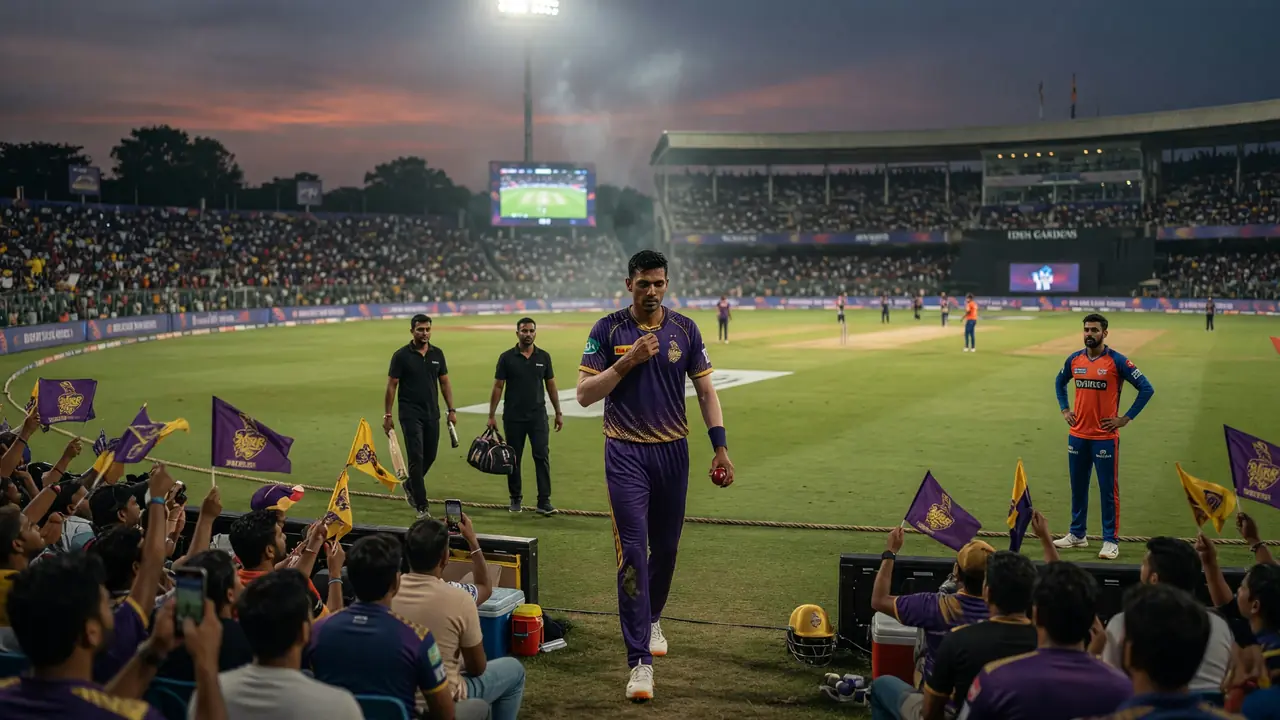
Two Indian franchises closed the same pre-season problem on the same day. On 25 March 2026, The Economic Times reported that Kolkata Knight Riders had drafted Navdeep Saini as the replacement for injured pacer Harshit Rana, and that Gujarat Titans had named Kulwant Khejroliya in place of Prithviraj Yarra. Both moves were pure injury replacements, not auction trades. Both were priced modestly by IPL standards. Both changed the depth chart of a franchise pace attack that already had a clear leadership core and a short list of backup options.
The report landed in the quiet window between international duty and the IPL opening round, when squad lists are meant to be settled and fantasy prices are starting to harden. For readers who track franchise depth through the IPL teams desk on Exchange22, the value of the day was not drama. It was clarity: who was out, who was in, what each replacement cost, and how those names sat beside the captains and senior bowlers already locked into both sides.
What the 25 March 2026 report confirmed
The Economic Times piece was a straight pre-tournament squad update. Kolkata Knight Riders confirmed Navdeep Saini as the stand-in for Harshit Rana, who had been ruled out injured ahead of IPL 2026. Gujarat Titans, in the same cycle of announcements, confirmed Kulwant Khejroliya as the replacement for injured pacer Prithviraj Yarra. The fees were reported as Rs 75 lakh for Saini and Rs 30 lakh for Khejroliya.
Those numbers matter because they place both signings in the replacement band rather than the marquee band. Neither franchise was rewriting its attack around a new overseas headliner. Both were buying Indian pace depth after a named first-choice or squad pacer was medically unavailable. The report also restated the leadership and core personnel around each signing: Ajinkya Rahane leading a KKR group that still carried Sunil Narine, Rinku Singh, Andre Russell, Varun Chakaravarthy and Umran Malik; Shubman Gill leading a Gujarat Titans side that already featured Jos Buttler, Rashid Khan, Mohammed Siraj and Kagiso Rabada among its key names.
Read as a pair, the announcements described two different kinds of depth problem. KKR lost a right-arm Indian pacer with recent franchise and international exposure and replaced him with another right-arm Indian pacer who already had a long IPL sample. GT lost a left-arm option and replaced him with another left-arm Indian fast bowler whose previous franchise stops included KKR and Royal Challengers Bengaluru. The symmetry was accidental. The logic was ordinary IPL risk management.
Why Harshit Rana was unavailable
Harshit Rana's absence was not a late niggle or a managed workload decision. According to the 25 March report, he suffered a knee strain in a warm-up match before the ICC Men's T20 World Cup, required surgery, and was still rehabilitating with no confirmed return date when KKR named the replacement. That sequence is the hardest kind of pre-season medical note for a franchise to absorb. Surgery removes any realistic hope of a short recovery window. The lack of a return date removes the option of carrying the player as a late-season contingency and hoping the medical staff can rush him back for the playoffs.
For KKR, that meant the replacement had to be ready for the full tournament, not a temporary cover. It also meant the franchise was paying a replacement fee for a player who would occupy a squad place that Rana would otherwise have held from the first league match. In practical terms, Saini was not arriving as a specialist death option or a short-burst overseas loan. He was arriving as the Indian pace body KKR needed once Rana's knee timeline collapsed.
The injury also sat against Rana's own recent trajectory. He had been part of the young Indian pace conversation heading into the white-ball cycle, and a clean run through IPL 2026 would have been the obvious next stage of that climb. The warm-up knee strain cut that path off before the franchise season began. KKR's decision to move for a replacement rather than wait was the only move available once surgery was confirmed and the return date remained open.
What Navdeep Saini brought into the KKR attack
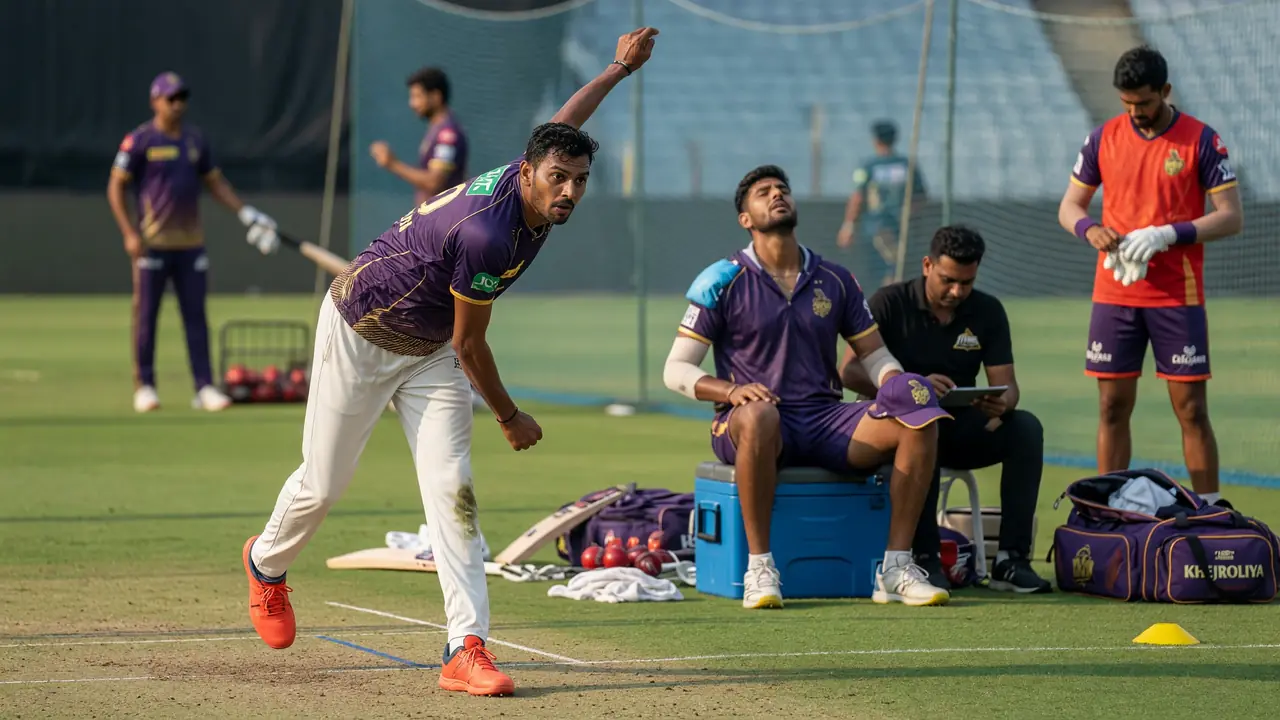
Navdeep Saini's profile, as restated in the March report, was simple and useful. He was a right-arm pacer with 23 wickets in 32 IPL matches. That sample is long enough to be more than a prospect line and short enough to leave room for roledefinition. It also meant KKR were not gambling on a debutant. Saini had already bowled through multiple franchise cycles, understood the competition's workload, and could be asked to operate in the middle overs or as a second-wave powerplay option depending on how the XI was balanced on a given night.
The reported fee of Rs 75 lakh put him in the mid-to-low replacement bracket. For a franchise already carrying high-impact names such as Narine, Russell and Varun Chakaravarthy, that price was the point. KKR did not need another headline salary. They needed a fit Indian seamer who could take overs if the first-choice pace combination broke down, and who would not force a reshuffle of the overseas slots. Saini satisfied both conditions.
The surrounding KKR core also shaped what Saini was not being asked to do. Ajinkya Rahane's side still had Umran Malik as a high-pace Indian option, Russell as a death-overs all-round threat, and two world-class spinners in Narine and Varun. Saini's job was depth and match-up flexibility, not to become the face of the attack. In a long league stage, that is often the more valuable role. Franchises lose games when the fourth and fifth bowling options cannot hold a middle-over block. The 25 March signing was aimed at that problem.
Gujarat Titans' parallel problem with Prithviraj Yarra
On the same reporting day, Gujarat Titans closed a different injury hole. Prithviraj Yarra, a left-arm pacer on the squad, was ruled out injured, and the franchise named Kulwant Khejroliya as his replacement. The report did not expand on the medical detail behind Yarra's absence in the same way it did for Rana, but the squad consequence was identical: GT needed a left-arm pace body before the season opened, and they preferred a known IPL name over an uncapped lottery ticket.
Khejroliya's fee was reported at Rs 30 lakh, less than half of Saini's figure. That gap is consistent with the career samples attached to each player. Khejroliya arrived with six IPL wickets and previous franchise stints that included Kolkata Knight Riders and Royal Challengers Bengaluru. He was not being signed as a guaranteed first XI bowler. He was being signed as left-arm insurance in a bowling group that already had serious firepower at the top of the order of selection.
That surrounding firepower is the key context. Gujarat Titans under Shubman Gill already listed Jos Buttler, Rashid Khan, Mohammed Siraj and Kagiso Rabada among the side's principal names. Siraj and Rabada alone gave GT a high-quality new-ball pair. Rashid remained the middle-overs control option. Khejroliya's value was narrower: a left-arm angle for specific batters, a second or third seam change-up if conditions offered swing, and a domestic squad option that did not consume an overseas berth. In replacement markets, that is a rational buy even when the career wicket tally is modest.
How the two replacements sat inside established squads
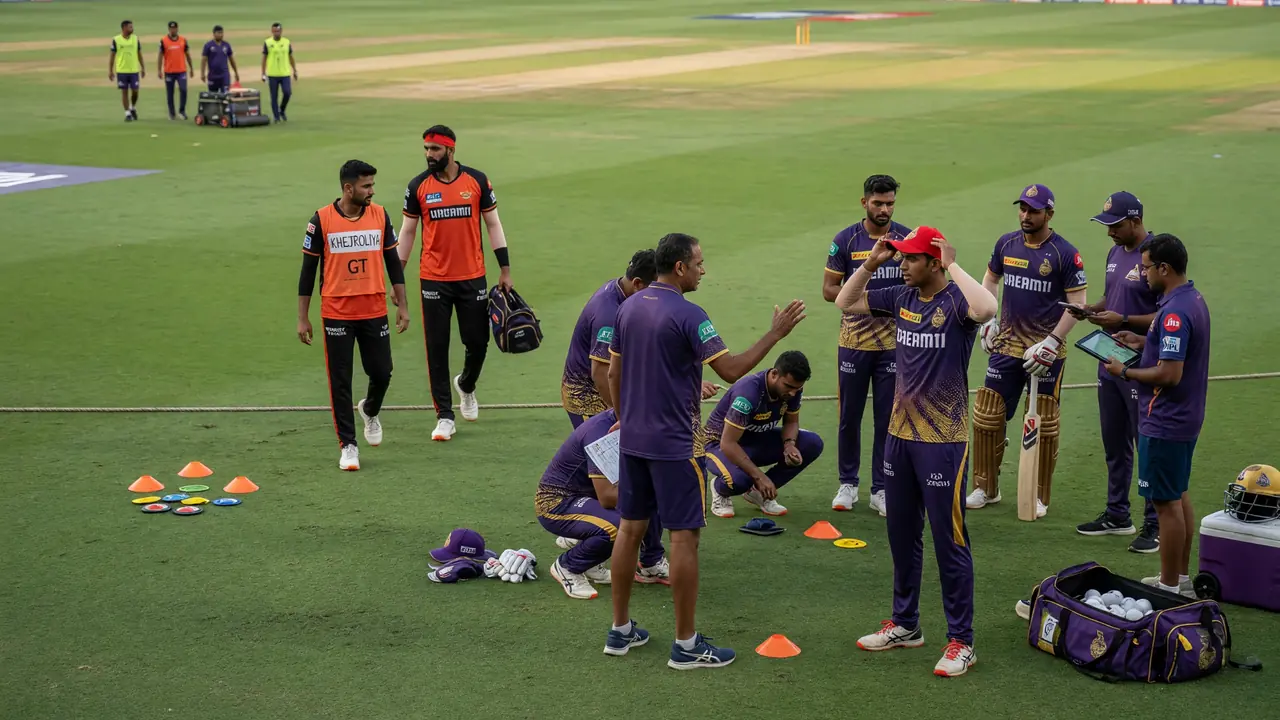
Neither signing rearranged the leadership of either franchise. KKR remained under Ajinkya Rahane, with the same senior batting and spin spine that defined the side's public profile heading into the season. Gujarat Titans remained under Shubman Gill, with Buttler in the top order and Rashid, Siraj and Rabada still the names that set the bowling ceiling. The 25 March moves were depth moves. They belong in the injury-replacement ledger, not in the auction-night story of either franchise.
That distinction is easy to lose once a season is underway and every XI change feels like a strategic pivot. Looking back from August 2026, the cleaner reading is mechanical. Rana's surgery forced KKR to spend Rs 75 lakh on a like-for-like right-arm Indian pacer with a 32-match IPL sample. Yarra's injury forced GT to spend Rs 30 lakh on a left-arm Indian pacer with prior KKR and RCB experience. Both franchises protected overseas balance. Both avoided leaving a seam vacancy unfilled into the opening fortnight.
The two squads also illustrate why Indian pace replacements remain the busiest part of the pre-season market. Overseas slots are finite. Spin stocks at both franchises were already strong. The only place left to leak overs under injury pressure was the Indian seam group. Saini and Khejroliya were answers to that specific leak, priced according to sample size and role width rather than brand power.
What the fees said about role and risk
Rs 75 lakh and Rs 30 lakh are not interchangeable numbers. Saini's higher fee tracked a larger IPL body of work: 23 wickets from 32 matches is a genuine middle-order sample in franchise terms. Khejroliya's lower fee tracked a thinner record: six wickets and a journeyman path through earlier franchises. The market, even in a forced replacement window, still priced proven overs higher than potential overs.
There is also a role difference buried in the handedness. KKR replaced right-arm with right-arm. GT replaced left-arm with left-arm. Franchises pay small premiums to preserve the angle they originally bought at auction, because field settings, match-up tables and death-over plans are built around those angles months in advance. Losing a left-armer and replacing him with another right-armer would have forced GT's analysts to redraw parts of the bowling map. Keeping the left-arm slot filled, even at modest cost, was cheaper than redesigning the plan.
None of this made either signing a guaranteed first XI player. Replacement status is not selection status. What the fees bought was availability. In a tournament that runs for two months with midweek travel and back-to-back fixtures, availability is often the difference between a bowling unit that can rotate and one that has to over-bowl its three best options until one of them breaks.
How fantasy and squad trackers should have read the day
For fantasy players building around franchise depth, the 25 March report was a clean data update rather than a captaincy story. Harshit Rana had to come out of any KKR watchlist that still treated him as available. Navdeep Saini had to go in as a low-to-mid priced Indian pace option whose ceiling depended on early-season opportunity rather than brand recognition. On the GT side, Prithviraj Yarra was no longer a live name, and Kulwant Khejroliya entered the long list of left-arm differentials who only matter if Siraj or Rabada miss a night or if conditions demand a second seamer of a different angle.
The more durable lesson sits one level above the names. Injury replacements published in late March are often more informative than mid-auction rumours because they describe the squad a franchise will actually carry into the first ball. Auction lists describe intention. Replacement lists describe necessity. When both KKR and GT spent real money, even modest money, on Indian pacers in the same news cycle, the signal was that both coaching groups preferred a full seam bench over holding cash or waiting on medical optimism.
Readers who keep franchise boards current through the IPL teams database on Exchange22 should treat those two rows as settled historical facts of the 2026 pre-season: Saini in for Rana at Rs 75 lakh; Khejroliya in for Yarra at Rs 30 lakh. The surrounding cores — Rahane's KKR with Narine, Rinku, Russell, Varun and Umran Malik; Gill's GT with Buttler, Rashid, Siraj and Rabada — stayed intact around them.
Why the double announcement still matters months later
Looking back from August 2026, the 25 March replacements are useful for a reason that goes beyond either player's eventual match count. They show how two title-relevant franchises handled the same structural risk in the same week. Both refused to open the season a seamer light. Both stayed inside the Indian pool. Both paid fees that matched sample size rather than hype. And both left their captaincy and overseas cores untouched.
That pattern is the quiet half of modern IPL squad building. Auction night writes the posters. March medical replacements write the depth chart. Rana's knee surgery and Yarra's injury forced those depth-chart edits into public view on the same day, which is why the Economic Times pairing still reads cleanly as a single pre-season snapshot. KKR bought overs and experience in Saini. GT bought a left-arm angle and prior franchise familiarity in Khejroliya. The rest of each squad stayed as previously advertised.
For anyone reconstructing how the 2026 pace stocks at Eden Gardens and in Ahmedabad were actually built, those two lines remain the correct starting point. The injuries were real. The fees were reported. The replacements were named before a ball was bowled. Everything that followed in the league stage sat on top of that March foundation rather than replacing it.
Frequently asked questions
Who replaced Harshit Rana at KKR for IPL 2026?
Kolkata Knight Riders drafted Navdeep Saini as the replacement for Harshit Rana ahead of IPL 2026. Saini joined for a reported fee of Rs 75 lakh after Rana was ruled out with a knee injury.
Why was Harshit Rana ruled out of IPL 2026?
Harshit Rana suffered a knee strain in a warm-up match before the ICC Men's T20 World Cup, required surgery, and was rehabilitating with no confirmed return date when KKR named the replacement.
Who did Gujarat Titans sign as a replacement for Prithviraj Yarra?
Gujarat Titans named Kulwant Khejroliya as the replacement for injured pacer Prithviraj Yarra. Khejroliya, a left-arm fast bowler, joined GT for Rs 30 lakh.
What were Navdeep Saini's IPL numbers when he joined KKR?
At the time of the signing, Navdeep Saini was a right-arm pacer with 23 wickets in 32 IPL matches.
What IPL experience did Kulwant Khejroliya bring to Gujarat Titans?
Kulwant Khejroliya had previously played for franchises including Kolkata Knight Riders and Royal Challengers Bengaluru and had six IPL wickets when GT signed him.
When were these IPL 2026 injury replacements reported?
The Economic Times reported the KKR and Gujarat Titans replacement signings on 25 March 2026, before the IPL 2026 season began.