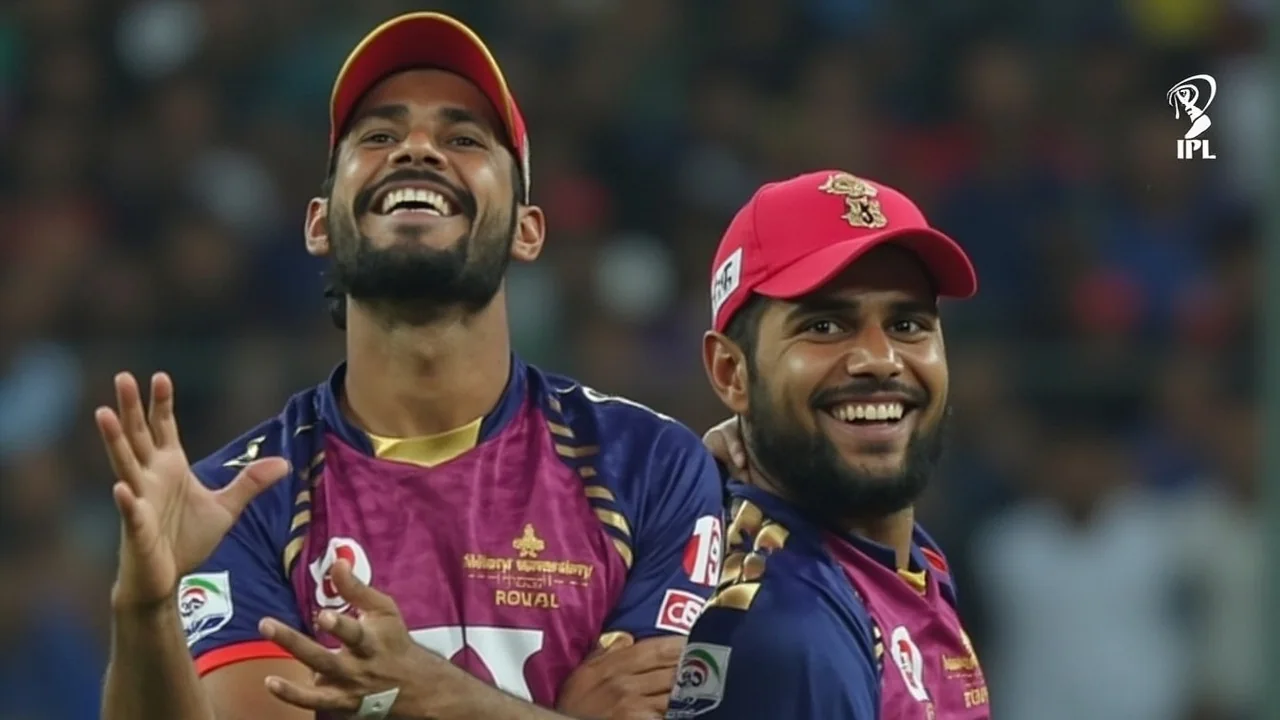
The 28th T20 of IPL 2026 sat at the awkward mid-table inflection point where the season stops rewarding slow starters and starts rewarding momentum. Rajasthan Royals arrived in Kolkata with four wins from five matches, third on the points table and the cleanest net-run-rate among the chasing pack. Kolkata Knight Riders arrived at home with five completed matches and no wins, tenth on the table, and a single point salvaged from a washed-out fixture. The fixture was, on paper, the most lopsided of the season so far. On a spin-friendly Eden Gardens surface with the dew factor cranking up after 5:00 PM, it was also the kind of fixture where the form book can be flipped inside ten balls if the toss goes the right way.
How the form book read on the morning of the fixture
Rajasthan Royals' batting had been the standout story of their first five games, and most of it had come from one end of the powerplay. Vaibhav Sooryavanshi had taken to IPL 2026 with the kind of innings-list that turns young batters into fantasy mainstays inside a fortnight: 200 runs in five innings, strike rate 263.16, knocks of 78 off 26 against Royal Challengers Bengaluru and 52 off 17 against Chennai Super Kings already on the ledger. The numbers say the same thing as the eye-test: he was not waiting for the bowling to settle, he was scoring off ball one. Yashasvi Jaiswal, opening with him, had complemented that with 184 runs at strike rate 157.26, including an unbeaten 77 against Mumbai Indians — the kind of innings that keeps the powerplay scoring rate honest even when Sooryavanshi falls early.
Kolkata Knight Riders' batting had been a different shape of story. Angkrish Raghuvanshi, still young enough to be listed as a breakout candidate, led the side with 190 runs at a strike rate of 157.02. Captain Ajinkya Rahane had 152 runs across six innings, a respectable total that did not feel like the headline act his side needed. Cameron Green had flickered with an unbeaten 79 against Gujarat Titans but had only 56 runs in his other five combined. The opening combination remained unsettled: Finn Allen's 81 runs at SR 192.86 sat next to a stretch of low-impact starts from the other options. The bow stocks were worse. Harshit Rana, Akash Deep and Mustafizur Rahman were all injured, leaving Vaibhav Arora to carry seven wickets and Kartik Tyagi to carry five. Sunil Narine and Varun Chakravarthy, with 26 combined wickets historically against RR, were the only KKR bowlers whose numbers priced in clearly against the form favourite.
The probable XIs and what they actually signalled
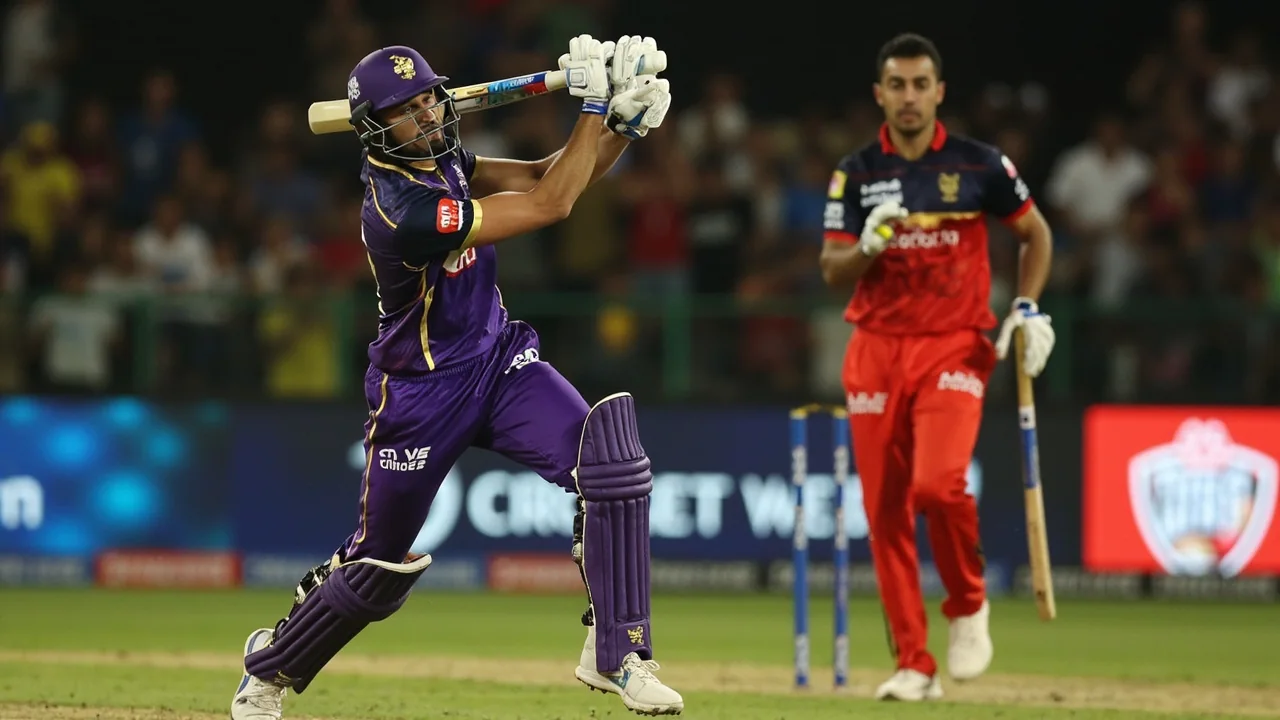
Rajasthan Royals went in with the XI the form book had been pointing to for two weeks: Jaiswal and Sooryavanshi at the top, Dhruv Jurel at three, captain Riyan Parag at four in his lower-middle-order finishing role, Lhuan-dre Pretorius and Ravindra Jadeja as the two Indian all-rounders, Donovan Ferreira as the overseas finisher, Jofra Archer and Tushar Deshpande as the two frontline seam options, Ravi Bishnoi as the lead spinner, and Nandre Burger as the third seamer. Sandeep Sharma was listed as the Impact Player option — the swap that would have come in if RR had won the toss and elected to bowl, because Sandeep's death-over skill set is more valuable when the chase is on. The XI was balanced, the batting went deep to eight, and the bowling group covered both the new ball and the death without needing a fourth frontline seamer.
Kolkata Knight Riders went in with the XI that kept the spin twins at the heart of the bowling and loaded the middle order with hitters: Finn Allen at the top with Rahane, Raghuvanshi at three, Cameron Green at four, Rinku Singh and Ramandeep Singh as the two finishers, Anukul Roy as the third seaming all-rounder, Sunil Narine and Kartik Tyagi as the two frontline bowlers alongside Vaibhav Arora, and Matheesha Pathirana as the third specialist bowler pending his NOC clearance from Sri Lanka Cricket. Varun Chakravarthy was listed as the Impact Player — the swap that came in if KKR needed a second specialist spinner in the middle overs, the most likely window on a surface where the ball was expected to grip from over seven onwards. The XI was top-heavy with batting and bottom-heavy with spin, which was the only honest way to play this Eden Gardens surface with the bowling stocks the side had left.
The Dream11 captaincy duopoly, and what it meant at the slot
The captaincy slot on the 28th T20 had two clear candidates and a long tail of differential options. Vaibhav Sooryavanshi sat at the top of the list with his 200 runs at SR 263.16 — the kind of recent form that turns a fantasy captain pick into a near-formality on a flat track. Yashasvi Jaiswal sat second, with 184 runs and a strong historical record against KKR (202 runs at SR 166.96 across previous meetings), making him the safer captaincy pick in the cash contests where ceiling matters less than floor. The vice-captaincy slot was the more interesting tactical call: Sunil Narine was the conservative pick, with his wicket-taking record against RR historically and the spin-friendly middle overs, while Ravi Bishnoi was the alternative-shape pick, with his nine wickets including the 4/41 against Gujarat Titans and the leg-spin variations that were expected to bite on a gripping Eden Gardens surface.
The two players the captaincy call had to actively avoid were Ajinkya Rahane and Finn Allen. Rahane's 152 runs across six innings had not been the match-defining impact his side needed, and his captaincy decisions through the first five games — most notably the choice to bat first against Gujarat Titans despite the dew forecast — had drawn pointed criticism from the KKR fan base. Finn Allen's 81 runs at SR 192.86 was high-impact but low-floor, the kind of profile that wins a single league when it lands and burns the captaincy slot when it doesn't. The Dream11 card on this fixture was therefore built around two clear top picks, two clear vice-captain options, and an honest avoid list — the kind of captaincy structure that gets sharper as the season settles into the second month of fixtures.
Reading the Eden Gardens surface in mid-April
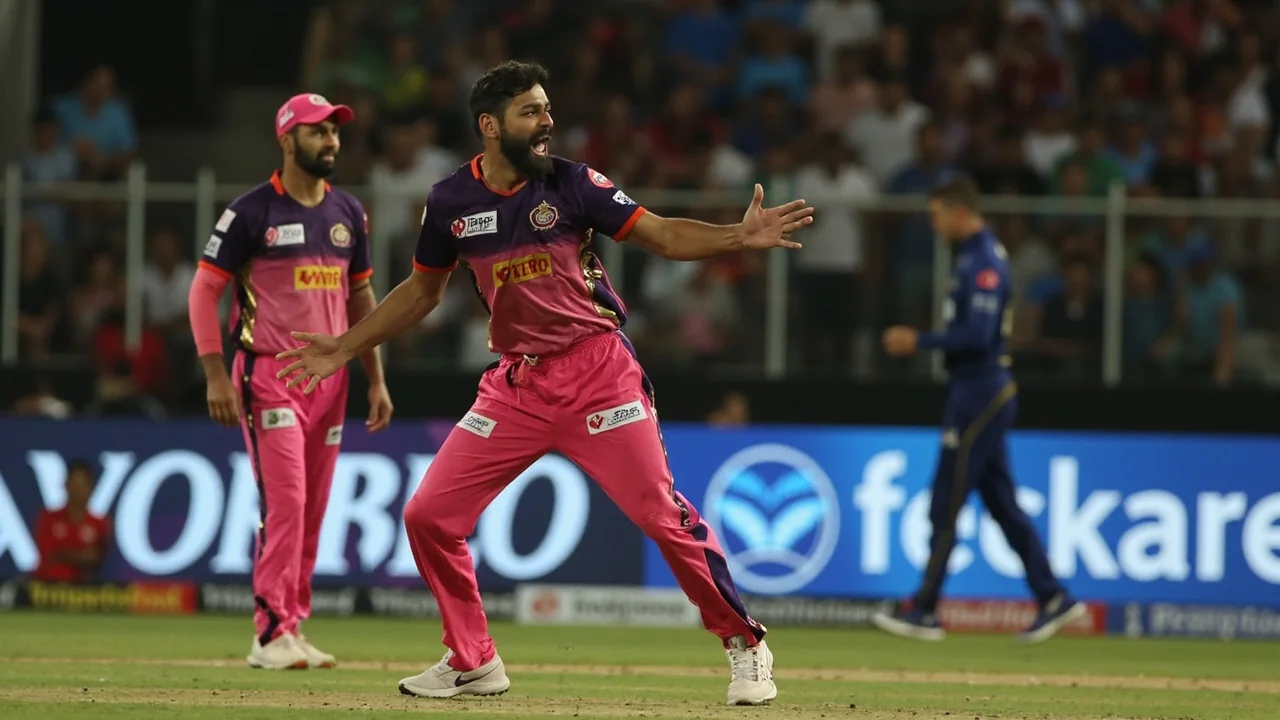
Eden Gardens in mid-April has historically been a balanced surface that favours batters early, grips for spinners in the middle overs, and tends to flatten out again for the death. The IPL 2026 average first-innings score at the venue was 169 — moderate by modern T20 standards, but a number that masked how lopsided the second-innings scores tended to be once the dew settled. The dew factor in the 3:30 PM IST slot was the single biggest tactical variable, because the team that won the toss was heavily favoured to chase: a wet ball skids on, the spinners lose grip, and the chasing side picks up an extra 15 to 25 runs in the closing four overs that the first-innings total had not accounted for. The IPL 2026 record at Eden Gardens going into this fixture read close to 70-30 in favour of the chasing side in completed matches.
The weather forecast supported the chase-first read. The forecast for the 3:30 PM IST start was 30 to 36 degrees C with partly cloudy skies, humidity 65 to 75 percent and wind 10 to 15 km/h — conditions that tend to bring the dew on earlier than usual in the second half of the evening. The pitch itself was expected to offer true bounce for the first six overs, true spin grip from overs seven to fourteen, and a flattening surface for the death where the ball came onto the bat a little more cleanly. Broadcast was on Star Sports Network across India, with streaming on JioHotstar in HD with multi-camera angles. The pre-match build-up was scheduled to start at 2:30 PM IST, including player interviews, fantasy tips and tactical insights — the kind of window where the fantasy reader usually has time to lock a team but not enough time to change a captaincy call after the toss.
The head-to-head and what history actually said
Across 32 all-time IPL meetings, Kolkata Knight Riders held a narrow edge with 16 wins to RR's 14 and two no-results. The headline read like a KKR advantage, but the recent meetings had been more competitive than the all-time ledger suggested. The last five meetings before this fixture split RR 2 and KKR 3, with both 2025 fixtures going to KKR. Eden Gardens, as a venue, had historically favoured KKR, but RR's aggressive batting approach in the last two seasons had started to neutralise that home advantage — Jaiswal and Sooryavanshi are not the kind of batters who need a settled powerplay to score quickly, which is the exact profile that flattens a home-ground bowling attack.
The all-format T20 record going into this fixture added another layer to the read. Rajasthan Royals had played 241 T20s all-format with 118 wins, 116 losses, three no-results and four tied, a 49.0 percent win rate. Kolkata Knight Riders had played 271 T20s all-format with 135 wins, 129 losses, three no-results and four tied, a 49.8 percent win rate. The two sides were, on a long enough timeline, statistically interchangeable. The IPL 2026 ledger, however, had pulled them sharply apart — RR's 4-1 with a strong net-run-rate, KKR's 0-5-1 with the worst net-run-rate in the league. The fantasy read on the fixture was therefore less about the historical ledger and more about the season-form delta, with the head-to-head serving as a tie-breaker in close contests and a confidence-builder for the chasing side if KKR managed to take early wickets.
What the toss decision actually changed
The toss decision at Eden Gardens in mid-April was the single highest-leverage coin flip of the 19 April fixture. The dew factor meant the side winning the toss was expected to chase in roughly seven out of ten fixtures, and the chasing side had won close to 70 percent of completed IPL 2026 matches at the venue. For RR, that read aligned cleanly with their season-long strength: chasing had been their cleaner suit, the top three of Jaiswal, Sooryavanshi and Jurel had built the bulk of their season runs in second-innings chases, and the impact-player swap of Sandeep Sharma for Tushar Deshpande gave them an extra death-over seamer. For KKR, the toss decision was the trickier read. Batting first would have meant defending a total in the second innings with a spin-heavy attack that loses grip when the ball is wet. Chasing would have meant asking a top order that had averaged under 30 in the powerplay through the first five games to set the pace against a varied RR attack.
The likely scenarios on the toss decision, in fantasy terms, were therefore tilted in RR's favour whichever way it fell. If RR won the toss and chased, the Sooryavanshi captaincy pick stayed clean, the Jaiswal vice-captaincy pick stayed clean, and the Bishnoi vice-captaincy pick gained a little upside from the death-overs bowling points. If KKR won the toss and chased, the Narine vice-captaincy pick gained a little because his four-over block would have come in the second innings when the dew would have hurt the RR spinners less. If KKR won the toss and batted first, the Rahane captaincy avoidance got sharper — defending 169 at Eden Gardens with this bowling attack was a low-probability outcome, and the fantasy slate had to price that in. The Cricketwebs match preview at the time carried the RR-tosses-and-bowls read, which is the cleanest of the four scenarios for the form favourite.
What the Cricketwebs preview actually said
The source for this retrospective is Cricketwebs' match preview for the 28th T20 of IPL 2026, published on 19 April 2026 at the standard morning preview slot. The page covered the probable XIs for both sides, the captaincy and vice-captaincy picks for the Dream11 slate, the venue-style pitch report built around Eden Gardens' IPL 2026 numbers, and a one-line forecast on the toss decision and the eventual result. The Cricketwebs read was that RR were clear favourites for four reasons: exceptional current form (4-1 versus 0-5), batting firepower unmatched in the league (Sooryavanshi's strike rate and Jaiswal's reliability), bowling depth that suits Eden Gardens (Bishnoi's spin and Archer's pace), and the psychological edge of a side playing with momentum against a side playing under pressure. The KKR counter was the spin twins: Narine and Varun's combined 26 wickets against RR historically was the single number that kept the fixture from being a pure form bet.
The relevant confirmed facts carried by the Cricketwebs preview and used in this retrospective are: the match was the 28th T20 of IPL 2026, scheduled for Sunday 19 April 2026 at 3:30 PM IST at Eden Gardens, Kolkata; RR had four wins from five matches sitting third on the points table, KKR were winless across five completed matches and tenth with one point from a washed-out fixture; Sooryavanshi had 200 runs at SR 263.16 in five innings, Jaiswal 184 at SR 157.26 with an unbeaten 77 against Mumbai Indians, Raghuvanshi 190 at SR 157.02, and Rahane 152 across six innings; RR's leading wicket-taker was Bishnoi with nine including 4/41 against Gujarat Titans, Archer had seven, Sandeep Sharma and Burger five each; KKR's Vaibhav Arora led the remaining attack with seven and Kartik Tyagi had five, with Harshit Rana, Akash Deep and Mustafizur Rahman injured; the suggested Dream11 captain was Sooryavanshi with Jaiswal as alternative, vice-captain options Narine and Bishnoi, players to avoid Rahane and Allen; the all-time IPL head-to-head was 32 matches, KKR 16 wins, RR 14, two no-results, last five meetings RR 2 KKR 3; Eden Gardens IPL 2026 first-innings average was 169, dew factor post-5:00 PM pushed toss winners to chase; the forecast was 30 to 36 degrees C, partly cloudy, humidity 65 to 75 percent, wind 10 to 15 km/h; the all-format T20 ledger was RR 241 matches, 118 wins (49.0 percent), KKR 271 matches, 135 wins (49.8 percent). Everything beyond those facts in this retrospective is the analysis our fantasy desk adds from the public numbers, not a quotation from the Cricketwebs page.
How the fixture reshaped the season for both sides
For Rajasthan Royals, the 28th T20 sat at the front edge of the hardest four-week stretch of their season — three away games in seven days, two of them against top-four opposition, before the mid-May break. A win at Eden Gardens would have kept them in the top two heading into that stretch and locked in a net-run-rate cushion that the chasing pack could not close down inside a single round. A loss would have been a soft reset, not a structural one: 4-2 is still a strong mid-table position, and the batting form of Sooryavanshi and Jaiswal would have continued to carry the side's fantasy value regardless of the result. The retrospective read on this fixture, looking back from the back half of IPL 2026, is that it confirmed what the form book had already said: RR's batting depth and spin-friendly bowling attack were the right profile for a season played in two halves.
For Kolkata Knight Riders, the 28th T20 sat at the opposite end of the same inflection. A win at home against the form favourite would have been the kind of result that turns a 0-5-1 season into a 1-5-1 season with a winnable run of fixtures coming up. A loss would have confirmed what the early-season numbers had been hinting at: the bowling stocks were too thin, the top order was too unsettled, and the impact of the injured pacers was being felt in every death over. The retrospective read from the back half of IPL 2026 is that this fixture sat at the front edge of the structural reset that eventually came for the side, the fixture where the form book and the historical ledger were, for the first and last time that season, sharply aligned in the same direction. The fantasy slate on this fixture was, accordingly, the cleanest it had been in weeks: one captaincy duopoly, one vice-captaincy duopoly, one avoid list, and one toss-driven tie-breaker.
Frequently asked questions
When was the 28th T20 of IPL 2026 between RR and KKR played?
Sunday, 19 April 2026 at 3:30 PM IST at Eden Gardens, Kolkata. First ball in the late-afternoon slot, with the dew factor cranking up after 5:00 PM and pushing the toss winner to chase in close to 70 percent of completed IPL 2026 matches at the venue.
What were the pre-match standings of RR and KKR?
Rajasthan Royals were third on the points table with four wins from five matches and the cleanest net-run-rate among the chasing pack. Kolkata Knight Riders were tenth and winless across five completed matches, with one point salvaged from a washed-out fixture.
Who were the leading captaincy candidates for the Dream11 slate?
Vaibhav Sooryavanshi (200 runs in five innings at SR 263.16) was the top captaincy pick, with Yashasvi Jaiswal (184 runs at SR 157.26, unbeaten 77 against Mumbai Indians) as the safer alternative. The vice-captaincy slot split between Sunil Narine (KKR's spin wicket-taker with historical success against RR) and Ravi Bishnoi (RR's lead spinner with nine wickets including 4/41 against Gujarat Titans).
Which bowlers led the wicket charts for both sides?
RR's Ravi Bishnoi led with nine wickets including 4/41 against Gujarat Titans, Jofra Archer had seven, and Sandeep Sharma and Nandre Burger five each. KKR's Vaibhav Arora led the remaining attack with seven wickets and Kartik Tyagi had five, with Harshit Rana, Akash Deep and Mustafizur Rahman all injured.
What was the Eden Gardens head-to-head and pitch outlook?
KKR led the all-time IPL head-to-head 16-14 across 32 meetings with two no-results; the last five meetings split RR 2 KKR 3 including both 2025 fixtures to KKR. The Eden Gardens first-innings IPL 2026 average was 169, with spin grip in the middle overs, dew factor post-5:00 PM and a forecast of 30 to 36 degrees C, partly cloudy, humidity 65 to 75 percent and wind 10 to 15 km/h.
Which players did the captaincy slot need to avoid?
Ajinkya Rahane (152 runs across six innings with no match-defining impact and a couple of questionable captaincy calls in the first five games) and Finn Allen (81 runs at SR 192.86 but a low-floor profile that burns the captaincy slot when it does not land). Both were priced as high-ceiling, low-floor picks that the cash-game captaincy slot could not afford.
Eden Gardens, 3:30 PM IST, 19 April 2026, the 28th T20 of an IPL season where form and history briefly pointed in opposite directions. The full Cricketwebs match preview, with probable XIs, captaincy call and the toss-driven tie-breaker, sits on the source page that this retrospective was built from; the rest is the kind of fantasy context our desk keeps for the Exchange22 Fantasy Cricket archive.