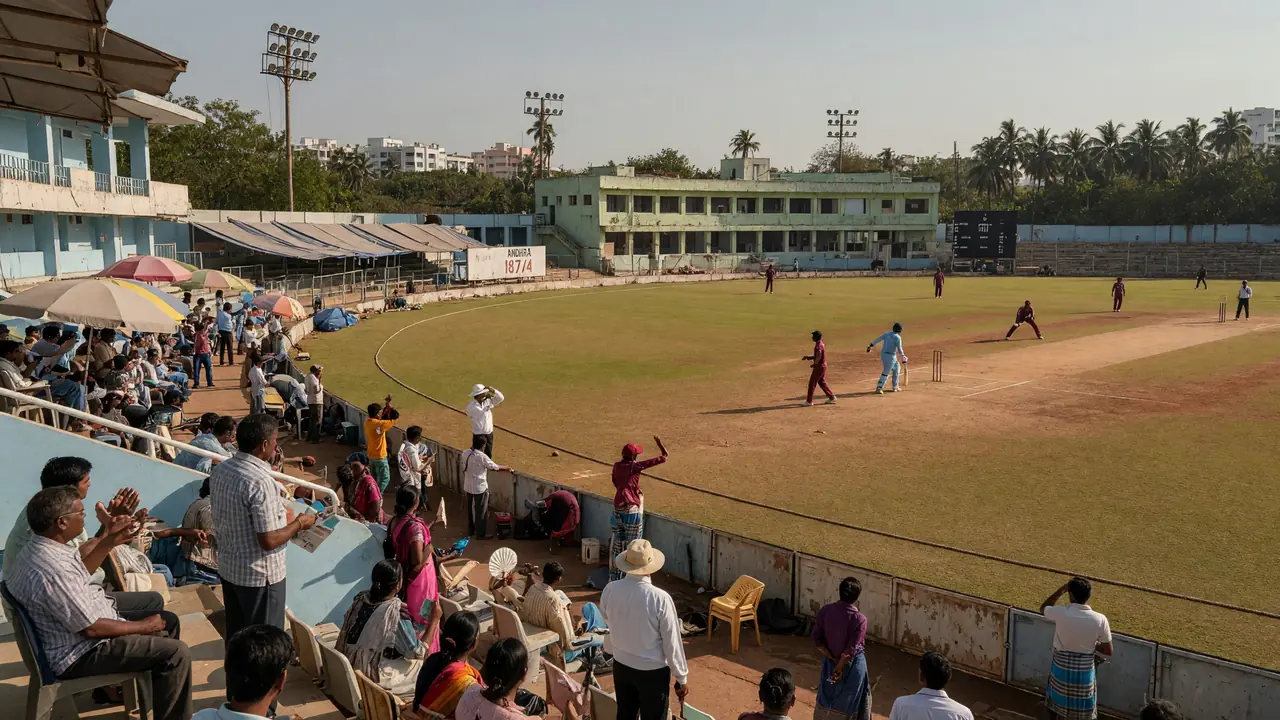
India T20I vice-captain N Tilak Varma was named captain of a 15-member South Zone squad for the Duleep Trophy on Sunday, 2 August 2026. The multi-day competition is scheduled at the BCCI Centre of Excellence in Bengaluru from 23 August to 10 September 2026, with Andhra batter Ricky Bhui appointed vice-captain and Andhra Level 2 coach MN Vikram Varma confirmed as head coach.
The appointment lands while Tilak’s white-ball form is still fresh from India’s 3–0 T20I series win over Zimbabwe. For South Zone, the choice places a current India limited-overs leader in charge of a red-ball group that already holds a direct path into the knockout stage. South Zone reached the previous final before losing to eventual champions Central Zone, and that run has earned them a straight semifinal berth this season.
For fantasy and form readers who track domestic multi-day cricket as a bridge between franchise blocks and national selection windows, the announcement is concrete rather than speculative: a named captain, a full fifteen, a fixed Bengaluru window, and a first South Zone fixture date already on the board.
How the leadership group was settled
Andhra Cricket Association secretary Sana Satish Babu convened the selection meeting. Former Andhra Ranji Trophy player RV Chandramouli Prasad chaired the panel. Representatives from Tamil Nadu, Karnataka, Hyderabad, Goa, Pondicherry and Kerala sat in the room, completing the southern-state footprint that feeds South Zone each season.
Tilak Varma’s elevation is the headline line, but the supporting structure matters almost as much. Ricky Bhui’s vice-captaincy keeps an Andhra middle-order voice next to the captain. MN Vikram Varma’s appointment as head coach adds a Level 2 coaching credential from the same state association that organised the meeting. Leadership, therefore, is not a single star call; it is a three-person axis around which the batting and bowling combinations will be built through August.
That axis also signals continuity with recent South Zone practice: senior domestic names stay in the core, while India-capped and India A performers are layered in where form and availability allow. Tilak supplies the India white-ball captaincy experience. Bhui supplies domestic seniority. The coach supplies a local programme link that can translate association-level preparation into a short zonal camp at the Centre of Excellence.
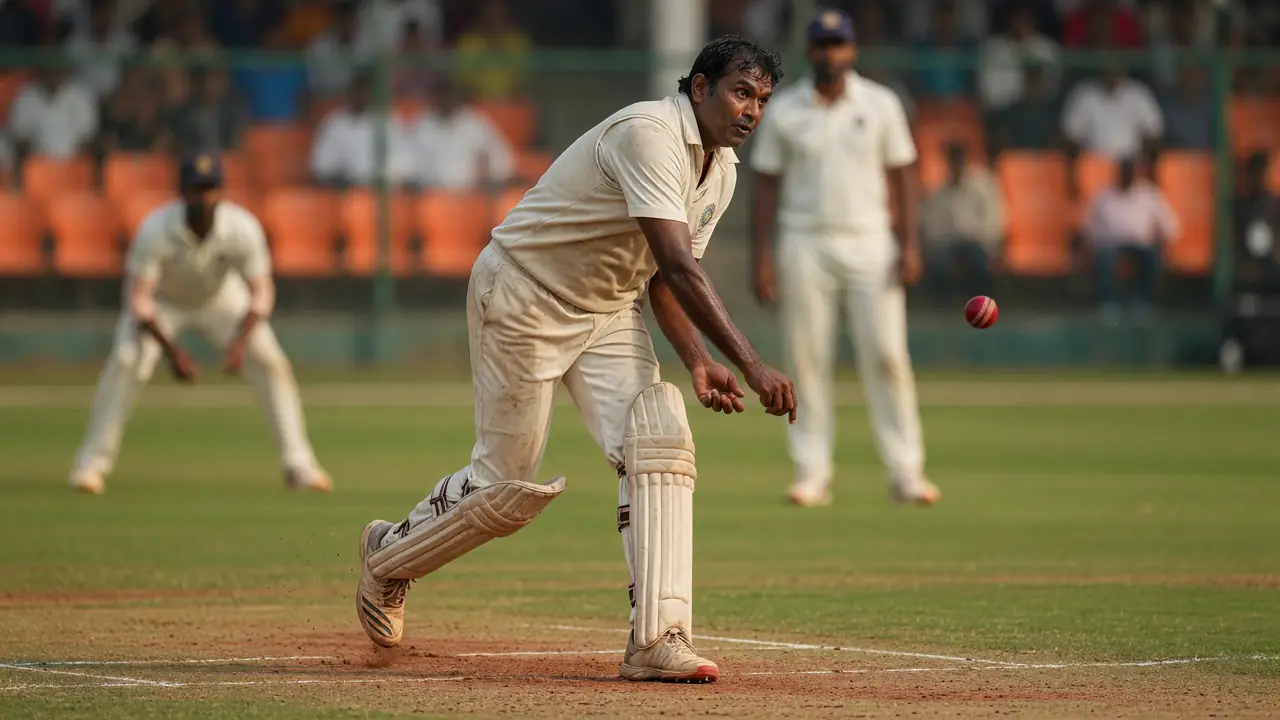
The full 15-member South Zone squad
The named group is N Tilak Varma (captain), Ricky Bhui (vice-captain), Abhinav Tejrana, Shaik Rasheed, K M Himateja, R Smaran, N Jagadeesan (wicketkeeper), Karun Nair, Tanay Thyagarajan, Shreyas Gopal, K Sai Teja, T Vijay, Vidvath Kaverappa, H Aman Khan and M D Nideesh.
Several inclusions carry recent performance tags that explain their place on the sheet. Karnataka’s R Smaran arrives as the 2025/26 Ranji Trophy leading run-getter with 950 runs, a volume that makes him an automatic multi-day reference point in any southern selection conversation. Hyderabad’s K Himateja and Goa’s Abhinav Tejrana extend the top- and middle-order options beyond the Andhra–Karnataka–Tamil Nadu axis. Shaik Rasheed returns after featuring in the India A side that beat Sri Lanka A 1–0. Tamil Nadu’s N Jagadeesan, also part of that India A tour of Sri Lanka, is the designated wicketkeeper.
Karun Nair’s presence gives the batting order a veteran who has already lived multiple red-ball selection cycles. Around him sit spin and seam options that can be shuffled once the Centre of Excellence surfaces are assessed: Tanay Thyagarajan and Shreyas Gopal among the slow-bowling names, Vidvath Kaverappa and M D Nideesh among the pace choices, with K Sai Teja, T Vijay and H Aman Khan completing the balance sheet. The fifteen is not a franchise auction wishlist; it is a short multi-day unit built for a knockout-tilted tournament schedule.
Tournament window, venue and South Zone’s path
The Duleep Trophy is set for the BCCI Centre of Excellence campus in Bengaluru across a three-week window from 23 August to 10 September 2026. Centralising the competition at the CoE keeps travel light and places every match on controlled training and match strips rather than a multi-city tour.
South Zone’s path is shorter than most. By reaching the previous final and losing to Central Zone, the eventual champions, they have been granted a direct semifinal entry. Their first match is scheduled for 30 August 2026 at BCCI COE Ground 2 against the winner of Quarterfinal 2. That structure means Tilak’s side can treat the early tournament days as a focused preparation block rather than a three-match pool slog, then step straight into knockout cricket at the end of August.
For Indian fans following domestic red-ball cricket through live score apps and fantasy platforms, the practical calendar is simple: selection news on 2 August, tournament start on 23 August, South Zone’s first ball on 30 August, and a final no later than 10 September. The gap between announcement and first match is long enough for a proper camp and short enough that current Ranji and India A form still reads as current.
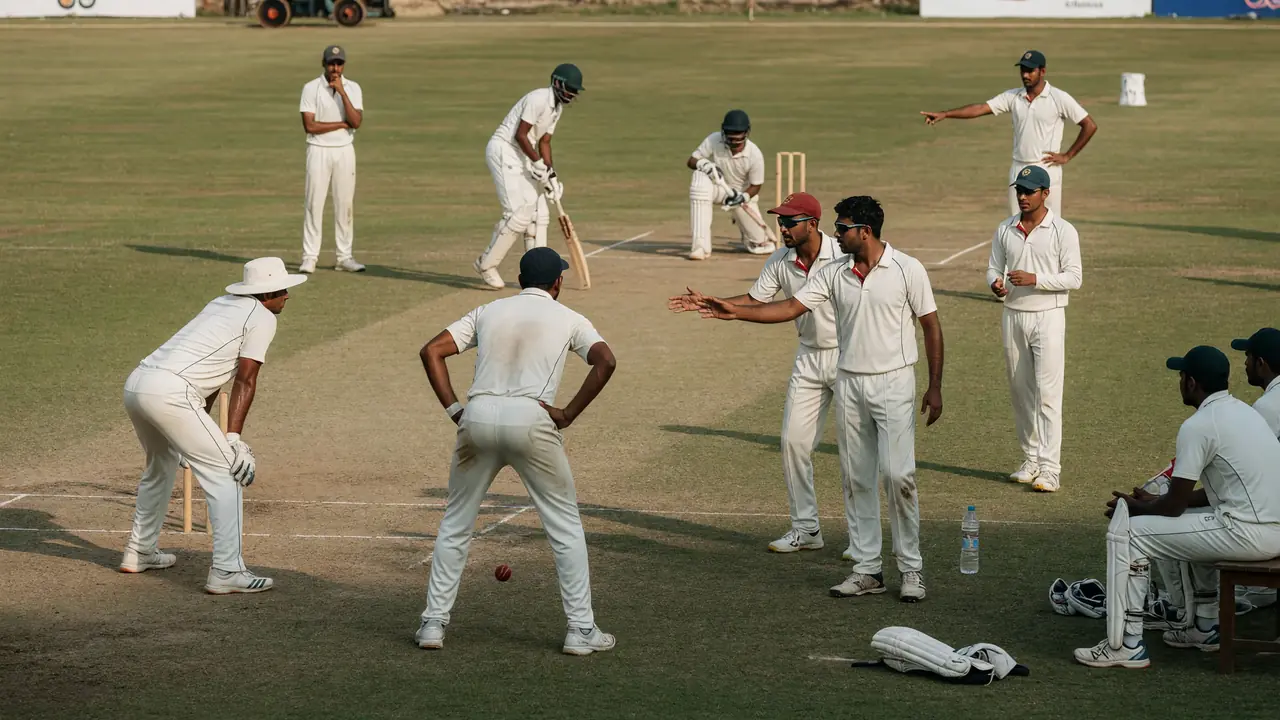
What the batting mix offers Tilak Varma
Captaincy in multi-day cricket is still a batting and field-setting job first. Tilak’s own white-ball credentials are established, but the South Zone sheet around him is deliberately red-ball heavy. Smaran’s 950-run Ranji season supplies a long-form run engine. Nair supplies experience against the new ball and in second-innings chases. Bhui’s domestic record gives the middle order a stabiliser who can bat time when the scoreboard is uneven.
Rasheed and Himateja add left- and right-hand variation that forces bowling captains to reset fields between overs. Tejrana’s inclusion from Goa widens the talent map and reduces the risk of an Andhra–Karnataka–Tamil Nadu monoculture in the top six. Jagadeesan’s dual role as keeper-batter means the side does not need a pure gloves specialist who offers little with the bat, a balance point that often decides whether a zonal XI can carry five bowlers.
The combination also gives Tilak options if the CoE pitches start dry and turn early. A top order that can occupy the crease for sessions, rather than only score in short white-ball bursts, is the difference between a competitive first-innings total and a side that is rolled before lunch on day two. The selectors have clearly prioritised that multi-day temperament over pure power-hitting reputation.
Bowling balance and the CoE surface question
The bowling names on the sheet point to a unit that can swing between seam and spin without a full rebuild. Vidvath Kaverappa and M D Nideesh give the new-ball attack two different angles. Shreyas Gopal and Tanay Thyagarajan cover leg-spin and left-arm orthodox options that become relevant once the surface loses early moisture. Sai Teja, T Vijay and Aman Khan fill the all-round and change-up overs that multi-day captains need when the primary strike bowlers are resting between spells.
Because every match is at the Centre of Excellence, the surface story will be shared knowledge rather than venue-to-venue guesswork. Teams that arrive early can bowl full sessions on the same family of pitches they will face in the knockout round. That favours a side with a direct semifinal bye: South Zone can use the first week of the tournament window to lock spell lengths, field placements and batting partnerships without the fatigue of a quarterfinal.
None of that guarantees a final berth. Central Zone arrived as defending champions after beating South Zone in the previous final, and other zones will treat the quarterfinals as high-stakes auditions. What the schedule does guarantee is clarity. Tilak’s group knows the opponent type — the winner of Quarterfinal 2 — and the ground — COE Ground 2 — more than three weeks in advance.
Selection politics without the noise
Zonal squads often attract noise about state quotas and India returns. The published process here is unusually transparent. The meeting was convened by the Andhra secretary, chaired by a former Andhra Ranji player, and attended by representatives from all seven southern units listed in the announcement. The finished fifteen still spreads across those units: Andhra leadership, Karnataka run-scoring, Hyderabad and Goa batting depth, Tamil Nadu keeping, and a bowling group drawn from multiple associations.
Tilak’s India T20I vice-captaincy is an asset, not a substitute for domestic volume. The side still leans on Smaran’s Ranji tally, Nair’s experience, Rasheed’s and Jagadeesan’s India A form, and Bhui’s long domestic middle-order record. That mix is how zonal cricket is supposed to work: current national white-ball leaders tested in multi-day conditions beside the domestic performers who actually carry Ranji seasons.
Readers should also keep the factual ceiling clean. The announcement confirms captain, vice-captain, coach, squad, tournament dates, venue, South Zone’s direct semifinal status, and the 30 August opener. It does not publish playing XIs, pitch ratings, or predicted margins. Any stronger claim would be invention.
What fantasy and form desks should track next
From a practical tracking standpoint, three checkpoints matter more than any squad-day reaction post. First is the CoE practice bulletin once South Zone assemble: who bowls long spells, who bats time in the middle, and whether Jagadeesan keeps in every session. Second is the identity of the Quarterfinal 2 winner, because that opponent dictates whether South Zone prepare for a seam-heavy or spin-heavy first hour on 30 August. Third is workload management around Tilak himself — he arrives as a white-ball India leader, and multi-day overs in the field will be managed differently from T20 overs.
Smaran’s 950-run Ranji season makes him the domestic form anchor on fantasy shortlists for multi-day contests that include Duleep fixtures. Nair and Bhui are the experience picks when surfaces are slow and batting time is the currency. Rasheed remains a high-upside middle-order name after the India A series against Sri Lanka A. On the bowling side, Kaverappa’s new-ball overs and Gopal’s leg-spin variations are the two most transferable skills from recent domestic cycles into a CoE knockout.
Anyone building teams around domestic red-ball windows on Exchange22 live match contests should treat 30 August as the first hard lock date for South Zone. Until then, the value is in monitoring camp notes and the quarterfinal bracket, not in forcing a full XI from a squad announcement alone.
Why the captaincy call fits the calendar
August and early September sit in a useful gap for Indian domestic multi-day cricket: franchise leagues have paused, and the next heavy international blocks are still being shaped. Handing South Zone to a current India T20I vice-captain in that window is a statement about leadership continuity as much as about batting. Tilak will be judged on how he sets fields on day three as much as on how he scores on day one.
Bhui’s vice-captaincy and Vikram Varma’s coaching appointment keep the Andhra programme tightly linked to the captain’s group, which should simplify logistics when the side reports to Bengaluru. The seven-state selection table, meanwhile, protects the broader southern talent pipeline that the Duleep Trophy is meant to showcase. The previous final appearance already proved South Zone can reach the last day of the competition; the new leadership group’s job is to convert that access into a cleaner knockout performance than the last final against Central Zone.
The verified next event on South Zone’s own calendar is straightforward: open the campaign on 30 August 2026 at BCCI COE Ground 2 against the winner of Quarterfinal 2, inside a tournament that closes by 10 September. Everything before that date is preparation. Everything after it will be written on the CoE scoreboards, not in Sunday’s selection minutes.
Frequently asked questions
Who will captain South Zone in the Duleep Trophy 2026?
India T20I vice-captain N Tilak Varma was named captain of the 15-member South Zone squad on Sunday, 2 August 2026.
Who is South Zone’s vice-captain and head coach?
Andhra batter Ricky Bhui is vice-captain. MN Vikram Varma, a Level 2 coach from Andhra, is head coach.
When and where is the Duleep Trophy 2026 being played?
The tournament runs from 23 August to 10 September 2026 at the BCCI Centre of Excellence in Bengaluru.
When do South Zone begin their campaign?
South Zone open on 30 August 2026 at BCCI COE Ground 2 against the winner of Quarterfinal 2, after earning a direct semifinal berth from last season’s final appearance.
Which players are in the named South Zone squad?
N Tilak Varma (captain), Ricky Bhui (vice-captain), Abhinav Tejrana, Shaik Rasheed, K M Himateja, R Smaran, N Jagadeesan (wk), Karun Nair, Tanay Thyagarajan, Shreyas Gopal, K Sai Teja, T Vijay, Vidvath Kaverappa, H Aman Khan and M D Nideesh.
Who chaired the South Zone selection meeting?
Former Andhra Ranji Trophy player RV Chandramouli Prasad chaired the panel. Andhra Cricket Association secretary Sana Satish Babu convened the meeting, with representatives from Tamil Nadu, Karnataka, Hyderabad, Goa, Pondicherry and Kerala present.