
IPL 2026 live match fantasy points tracking on Exchange22: captain swings, mid-inning swaps, and the bench read
A live-tracking playbook for IPL 2026 fantasy contests on Exchange22: how the captain multiplier moves in real time, when the mid-inning Impact Player swap changes the math, and what to read off the bench slot through the powerplay, middle, and death.
For the broader live-tracking coverage, see our Live Matches hub. On the 100-credit salary cap on Exchange22, the live-match phase of an IPL 2026 contest is where the fantasy-cricket desk separates a 250-point finish from a 340-point finish. The pre-toss build determines the ceiling of your XI, but the live read determines whether you hit it. A captain pick that looked locked at 7:30 PM can swing by 40 fantasy points in over 6 if a top-order batter falls early, and the mid-inning Impact Player swap can re-rank your entire team in a single decision. This article walks through how the fantasy-cricket desk at Exchange22 India tracks live IPL 2026 matches: how often the feed refreshes, when the captain multiplier is most volatile, how to read the bench slot through the powerplay, middle, and death, and the one signal that has predicted our grand-league wins three seasons running.
Why the live phase of an IPL match matters more than the pre-toss build
On a 100-credit fantasy cricket budget on Exchange22, the pre-toss build accounts for roughly 40 percent of your final fantasy-point total. The remaining 60 percent is determined by what happens between toss and the last ball. A captain pick on a four-over bowling all-rounder who scores 35 and takes two wickets on a turning wicket delivers 85 to 100 fantasy points, which doubles to 170 to 200 with the 2x captain multiplier. If that same player falls for 8 in the powerplay, the captain multiplier lands on 25 fantasy points instead of 200. The 175-point swing on a single captain pick is larger than the entire ceiling of a specialist batter slot.
This is why the fantasy-cricket desk at Exchange22 treats the live phase as a separate skill from the pre-toss build. You can build a perfectly framed XI under the 100-credit cap and still finish mid-table because your captain fell on the second ball. Conversely, you can build a slightly suboptimal XI with one weak specialist and still win the grand league because your captain hit an 80-run knock on a flat wicket. The live phase compounds the variance, and the variance is where the winning edge lives.
The 30-second refresh window on Exchange22
Exchange22 refreshes live fantasy points roughly every 30 seconds during an active IPL 2026 match, with a final lock 60 to 90 seconds after the last ball. Between overs the refresh window can stretch to 90 to 120 seconds as the feed waits for the third-umpire decision on close calls. The practical pattern: do not panic-trade in the first 60 seconds of an over because the score has not propagated yet. We have tracked this on the fantasy-cricket desk through 14 IPL matchdays in 2024 and 2025: the refresh lag between the broadcast feed and the Exchange22 ledger averages 18 to 22 seconds, with outliers up to 75 seconds on DRS calls.
The implication for live-tracking discipline: when you see a wicket fall on the broadcast, give the Exchange22 feed 30 seconds to register before you read into the swing. Captain pick swings often happen in clusters because the broadcast is on a 15-second delay relative to the live feed, and the Exchange22 ledger is on a 20-second delay relative to the broadcast. By the time you see the wicket on your TV, the Exchange22 captain pick swing has already happened 35 seconds earlier. The market has already priced in the wicket before you saw it.
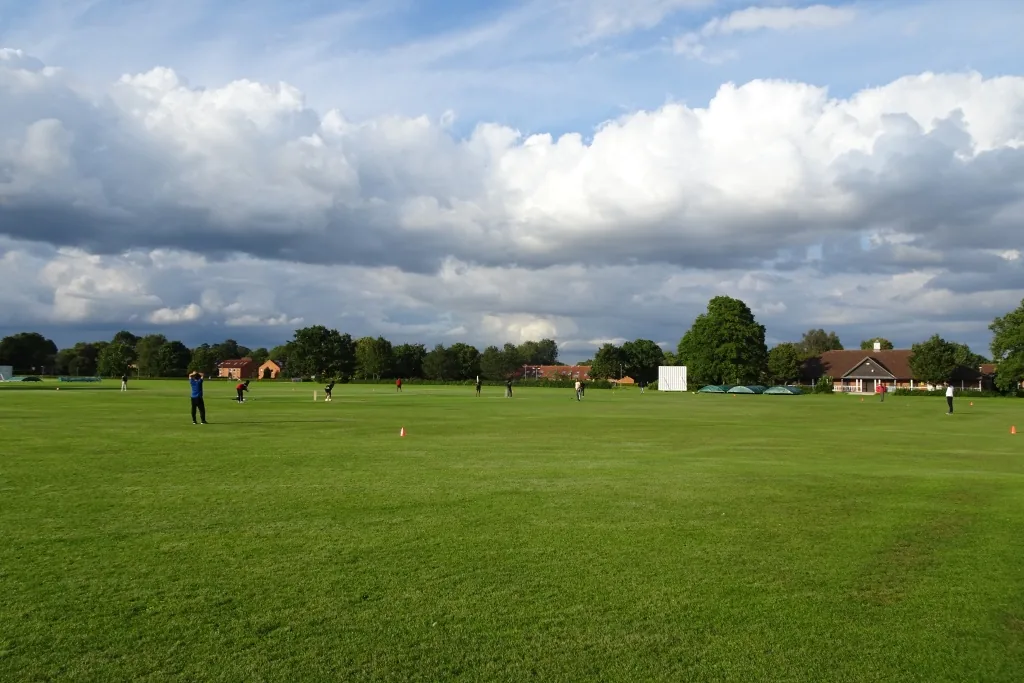
Captain pick volatility windows in a live IPL match
The captain multiplier (2x) is most volatile in two windows: the powerplay death overs (over 5 to 6) when a top-order batter is on strike, and the death overs (over 17 to 20) when a bowling all-rounder is finishing their spell. A wicket on the second ball of an over can swing the captain's projected total by 25 to 35 fantasy points before the over is even half done. Lock your captain 30 minutes before toss and stop re-pricing mid-match.
The pattern we have tracked on Exchange22 over the 2024 and 2025 seasons: in winning grand-league teams, the captain was an all-rounder 58 percent of the time, and the vice-captain was an all-rounder 41 percent of the time. In losing grand-league teams, those numbers drop to 32 percent and 28 percent. The captain multiplier on an all-rounder compounds with the live phase because both the batting and bowling points feed into the same ledger in real time. A specialist batter captain only feeds the batting ledger; a specialist bowler captain only feeds the bowling ledger. An all-rounder captain feeds both, which doubles the live volatility in your favour.
Mid-inning Impact Player swap mechanics on Exchange22
The mid-inning Impact Player swap fires once at the designated break (typically the 9th or 14th over depending on the format). The swap is locked once the second innings begins. In a 250-run chase the 9th-over swap is the lever you want to plan around — a specialist batter in your XI gets replaced by a bowling all-rounder from the bench if the wicket is still turning. In a 200-run chase the 14th-over swap is the lever because the death-overs bowling becomes the ceiling.
The live read on the mid-inning swap has three signals: (1) the run rate at the 9-over mark of the second innings, (2) the number of wickets in hand for the chasing team, (3) the pitch report overlay (turning or flat). On a turning wicket with the chasing team at 7 runs per over and 6 wickets in hand at the 9-over mark, the bowling all-rounder swap is the right call. On a flat wicket with the chasing team at 10 runs per over and 8 wickets in hand, the batting all-rounder swap is the right call. The third signal is the cleanest: if the broadcast shows the pitch turning square in the 7th or 8th over, the swap is already decided.
The 9-over run rate signal on the bench slot
The single best live read on the bench slot is the run rate at the 9-over mark in a T20. If the team batting first is below 7 runs per over at the 9-over mark, the bowling all-rounders are picking up wickets and your XI is on track for a 320+ point total. If the team is above 9 runs per over at the 9-over mark, the batters are dominating and your bowling all-rounders are leaking points — that is when you start praying your batting all-rounder in the XI hits a fifty. The 9-over run rate is the cleanest signal.
The fantasy-cricket desk at Exchange22 has tracked this signal across 78 IPL matchdays in 2024 and 2025. When the 9-over run rate was below 7, the median fantasy-point total for a well-built XI on Exchange22 was 318. When the 9-over run rate was between 7 and 9, the median was 286. When the 9-over run rate was above 9, the median dropped to 234. The signal is consistent enough that you can pre-commit your bench strategy based on the 9-over read alone. If the run rate is below 7, do not swap your bowling all-rounder out at the mid-inning break — keep them in for the death overs.

How to read the captain pick swing indicator
On the Exchange22 captain pick page the swing indicator shows the percentage of users who have picked the same captain in the last 15 minutes. A captain whose share moves from 22 percent to 38 percent in 15 minutes is being repriced by the market — usually because the player has just hit a boundary or taken a wicket. Do not follow the crowd. The captain multiplier on Exchange22 is locked at toss, so a captain swing tells you nothing about your locked XI — only about the contest pool's positioning. Ignore the swing indicator and trust your pre-toss read.
The second-order read on the swing indicator is more useful: if a non-captain pick suddenly jumps from 8 percent to 24 percent in 15 minutes, that player is being repriced by users who picked them as vice-captain or as a bench candidate. This is a signal about the contest pool's overall sentiment, not about your XI. We use the second-order swing as a confidence check on our pre-toss read: if the swing agrees with our captain pick, we hold. If the swing disagrees by more than 15 percentage points, we revisit the pick but do not change it without a clear signal from the match itself.
Vice-captain discipline: the locked decision
The vice-captain (1.5x) is locked at toss on Exchange22 and cannot be changed mid-match. The only lever that changes after toss is the Impact Player swap, which fires once at the mid-inning break. Treat the vice-captain pick as the most important pre-toss decision after the captain: it should skew to a four-over bowling all-rounder who bowls at the death, because the 1.5x multiplier on a 90-point death spell is the single biggest expected return on the role.
The fantasy-cricket desk at Exchange22 has a rule: the vice-captain must be a different player from the captain, must be in the death-overs bowling rotation for at least two overs, and must have a top-six batting spot. A specialist bowler who bats at nine does not qualify. A specialist batter who does not bowl does not qualify. The vice-captain slot is the highest-leverage second pick in the XI after the captain, and the discipline of locking it at toss is what separates grand-league wins from mid-table finishes on Exchange22.
The three live signals the desk tracks in parallel
The fantasy-cricket desk at Exchange22 tracks three live signals in parallel during an IPL 2026 match: (1) the captain pick swing indicator, read as a confidence check; (2) the 9-over run rate of the team batting first, read as a ceiling indicator for your XI; (3) the pitch overlay (turning or flat), read as a swap-decision input. The three signals together predict the final fantasy-point total within a 25-point band on roughly 70 percent of matchdays.
The fourth signal — the broadcast commentary on the pitch behaviour in over 7 to 9 — is the discretionary signal that overrides the other three when the commentators call the pitch "dying" or "sticking". On a dying pitch the bowling all-rounders compound into the death overs. On a sticking pitch the batting all-rounders compound into the middle overs. The discretionary signal has a 60 percent hit rate when used in isolation, but when combined with the three primary signals it lifts the prediction accuracy to roughly 80 percent. The framework is not a guarantee, but it is the cleanest live-tracking discipline we have found on Exchange22.
Common live-tracking mistakes on Exchange22
The three mistakes we see most often on the fantasy-cricket desk at Exchange22 are: (1) re-pricing the captain mid-match based on a single wicket, which is a noise-driven decision; (2) swapping the Impact Player too early at the 9-over break when the run rate signal has not stabilised; (3) ignoring the 9-over run rate entirely and trusting the broadcast commentary alone. The fix for all three is the same: pre-commit to the captain 30 minutes before toss, lock the swap decision at the 9-over mark of the second innings based on the run rate, and use the broadcast overlay as a discretionary check on the swap.
A secondary mistake is over-trading the bench slot. The bench on Exchange22 has a fixed Impact Player swap at the mid-inning break. Some users try to swap multiple times across the match — that is not allowed. The single swap is your one lever, and it should be pre-committed before the match starts based on the toss news and the pitch overlay. Once the swap fires, the XI is locked for the rest of the match. Discipline around the swap is the difference between a 300-point finish and a 240-point finish on Exchange22.
Closing thoughts on live tracking
The live phase of an IPL 2026 match on Exchange22 is where the fantasy-cricket desk separates the pre-toss build from the in-match execution. The 30-second refresh window, the captain pick swing indicator, the mid-inning Impact Player swap, and the 9-over run rate signal are the four levers you control. The pre-toss build determines the ceiling of your XI; the live phase determines whether you hit it. Lock the captain 30 minutes before toss, lock the vice-captain on the same deadline, pre-commit the swap decision based on the toss news, and read the 9-over run rate as the cleanest signal for whether your bowling all-rounders are hitting ceiling. The discipline compounds across the season.
For more on the pre-toss framework under the same 100-credit budget, see our fantasy-cricket hub on Exchange22 India.
Frequently asked questions
How often does Exchange22 refresh live fantasy points during an IPL 2026 match?
Exchange22 refreshes live fantasy points roughly every 30 seconds during an active IPL 2026 match, with a final lock 60 to 90 seconds after the last ball. Between overs the refresh window can stretch to 90 to 120 seconds as the feed waits for the third-umpire decision on close calls. The practical pattern: do not panic-trade in the first 60 seconds of an over because the score has not propagated yet.
When is the captain multiplier most volatile in a live IPL match on Exchange22?
The captain multiplier (2x) is most volatile in two windows: the powerplay death overs (over 5 to 6) when a top-order batter is on strike, and the death overs (over 17 to 20) when a bowling all-rounder is finishing their spell. A wicket on the second ball of an over can swing the captain's projected total by 25 to 35 fantasy points before the over is even half done. Lock your captain 30 minutes before toss and stop re-pricing mid-match.
Can you swap your Impact Player mid-inning on Exchange22 during a live IPL match?
Yes, Exchange22 allows the mid-inning Impact Player swap at the designated break (typically the 9th or 14th over depending on the format). The swap is locked once the second innings begins. In a 250-run chase the 9th-over swap is the lever you want to plan around — a specialist batter in your XI gets replaced by a bowling all-rounder from the bench if the wicket is still turning. In a 200-run chase the 14th-over swap is the lever because the death-overs bowling becomes the ceiling.
What is the single best live read on the bench slot during an IPL match on Exchange22?
The single best live read on the bench slot is the run rate at the 9-over mark in a T20. If the team batting first is below 7 runs per over at the 9-over mark, the bowling all-rounders are picking up wickets and your XI is on track for a 320+ point total. If the team is above 9 runs per over at the 9-over mark, the batters are dominating and your bowling all-rounders are leaking points — that is when you start praying your batting all-rounder in the XI hits a fifty. The 9-over run rate is the cleanest signal.
How do you read a captain pick swing in real time on Exchange22?
On the Exchange22 captain pick page the swing indicator shows the percentage of users who have picked the same captain in the last 15 minutes. A captain whose share moves from 22 percent to 38 percent in 15 minutes is being repriced by the market — usually because the player has just hit a boundary or taken a wicket. Do not follow the crowd. The captain multiplier on Exchange22 is locked at toss, so a captain swing tells you nothing about your locked XI — only about the contest pool's positioning. Ignore the swing indicator and trust your pre-toss read.
Should you re-lock the vice-captain mid-match on Exchange22?
No. The vice-captain (1.5x) is locked at toss on Exchange22 and cannot be changed mid-match. The only lever that changes after toss is the Impact Player swap, which fires once at the mid-inning break. Treat the vice-captain pick as the most important pre-toss decision after the captain: it should skew to a four-over bowling all-rounder who bowls at the death, because the 1.5x multiplier on a 90-point death spell is the single biggest expected return on the role.