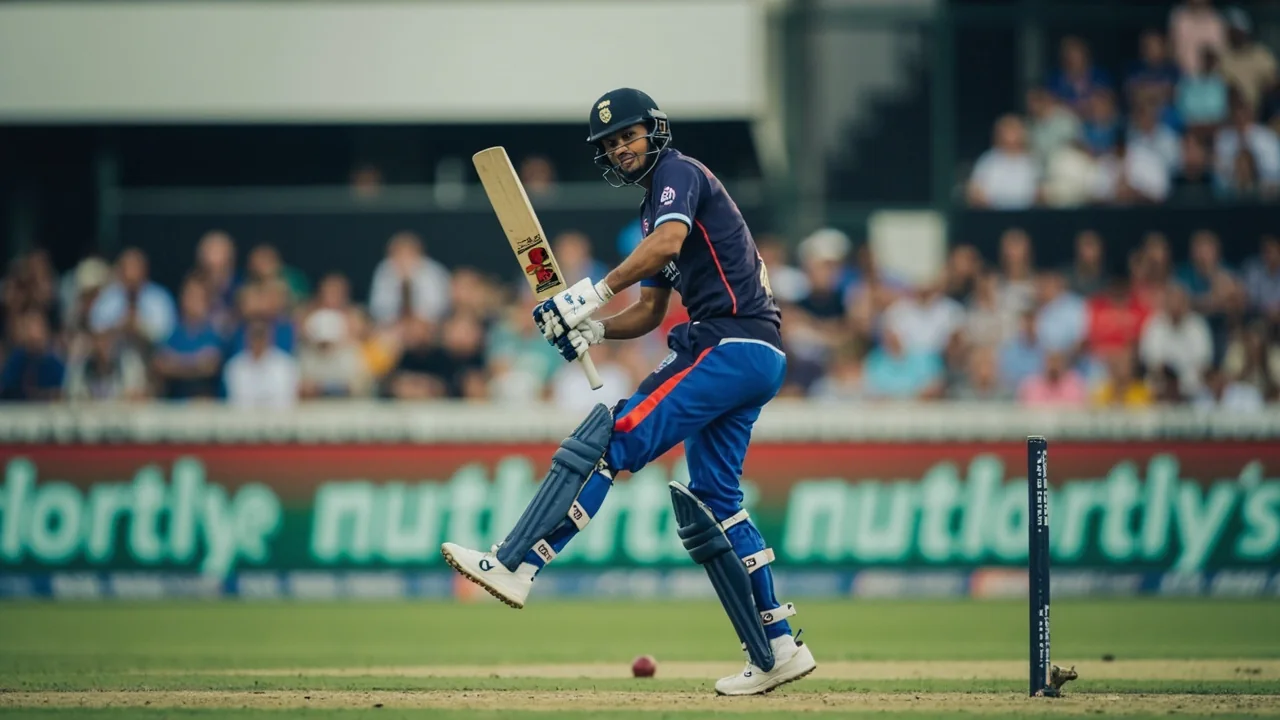
By the time the umpires walked out at the Riverside Ground on the evening of Wednesday 1 July 2026, the narrative around the England vs India series had already been written by something that had nothing to do with T20 cricket. England's Test side had lost to New Zealand at home on Monday — three days inside a 4-0 series scoreline, two days before the white-ball squad regrouped, and exactly one full day before Jos Buttler, Harry Brook and Jofra Archer were due to walk back into a changeroom in Durham. Shreyas Iyer's India arrived with a different kind of momentum: a short series in Ireland that had tested the batting depth, a settled captain for the T20I leg, and a top order with three players under the age of twenty-five. The opener at Chester-le-Street became less about form and more about how each side handled the conditions under lights on a quick English summer evening.
The Riverside Ground and what it does to a T20I
The Riverside Ground has staged international cricket since 1999 and has hosted List A and T20 fixtures for the Durham franchise for the better part of two decades. For a T20I, the venue offers good carry to the seamers in the first six overs, a square boundary that pulls power-hitters towards the leg side, and a typical English summer outfield that slows slightly as the night cools. The pitch on the Riverside has historically been described as balanced — enough pace and bounce for fast bowlers with the new ball, and enough roughed-up surface by innings three for spinners to grip in the second half of the chase.
Conditions in late June 2026 leaned towards batting second. The floodlights take the worst of the early-evening humidity out of the air, the ball comes on more cleanly under lights than in natural afternoon sun, and the typical T20I score at this venue in recent seasons has sat in the 165–185 range when the pitch has been used once before in the same window. Both captains had reason to read the toss as a chase if it went their way.
For Indian viewers, the timing was straightforward: a 10:00 PM IST start with a typical T20I running just under three and a half hours. The broadcast fell in the post-dinner window, which kept it in line with Sony's standard evening slate and let working fans catch the back end of the contest without a late-night compromise.
India's side and Iyer's captaincy brief
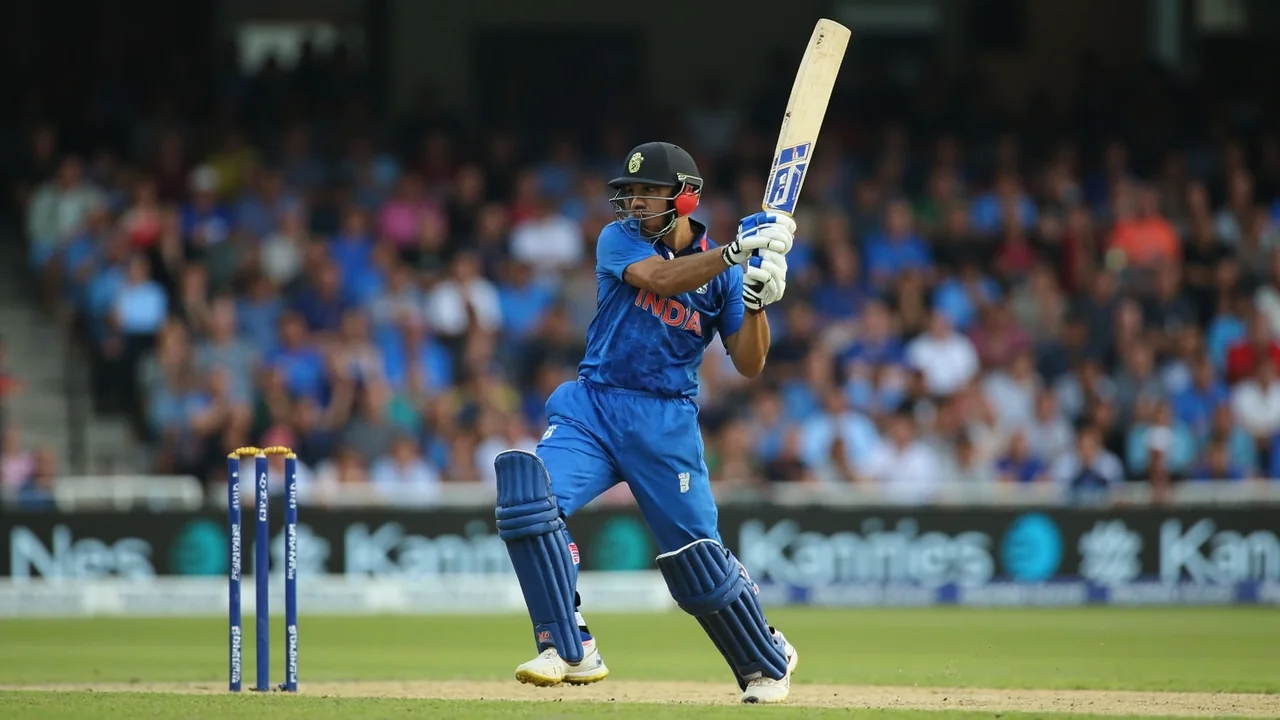
India's predicted XI for the opener was built around the batting depth that won the T20 World Cup in 2024 and the youth push that defined the squad for the 2026 cycle. Abhishek Sharma was set to open with Vaibhav Suryavanshi, Ishan Kishan was listed at three, Iyer himself at four, and Tilak Varma, Shivam Dube and Axar Patel rounded out a middle order that gives the captain at least three left-hand options through the innings. The bowling line-up had Harshit Rana, Arshdeep Singh and Prince Yadav as the three frontline seamers, with Ravi Bishnoi as the lead spinner and Axar Patel as the second spin option depending on match-up.
Iyer's brief in the T20I leg was straightforward: run the same XI patterns that had worked in the Indian Premier League and let the new ball do the early talking. The senior pros in the dressing room — Suryavanshi aside, every India batter in the predicted XI had played a T20 World Cup campaign — and Iyer himself had led a side in eleven T20Is going into the series. The big selection sub-plot was whether Bishnoi would be preferred ahead of a third seamer on a Riverside surface that was expected to grip more than the M. Chinnaswamy tracks the squad had grown up on.
India's head-to-head record in T20Is going into the match was the kind of stat line captains like to keep quiet: 18 wins from 30 completed matches against England, with no no-results in the published ledger. The recent away record against England had been patchier — the 2024 series at home was lost — but in Ireland earlier in the summer India had adjusted to seaming conditions with three wins from four. Iyer's challenge at Chester-le-Street was to translate that adjustment into English conditions, where the ball swings a fraction later and the square boundaries ask a different question of the power game.
England's side and the Test hangover
England's predicted XI was more unsettled than India's, and not only because of the Test result on Monday. Harry Brook had taken over the T20I captaincy ahead of the series, with Jos Buttler retained as wicketkeeper and senior voice behind the stumps. The top order was Phil Salt, Buttler and Brook, with Jacob Bethell and Tom Banton slotting in at four and five — a left-right combination that has been part of England's white-ball thinking since the start of 2026. Sam Curran and Will Jacks were listed as the all-round options in the middle order, with Jofra Archer, Luke Wood and Saqib Mahmood making up the seam attack and Adil Rashid the lone specialist spinner.
The Test defeat to New Zealand landed awkwardly. Three Tests, three losses, and the seam group — Archer, Wood, Mahmood — had bowled more than 120 overs between them at Lord's and Trent Bridge over the previous seven days. The official turnaround from the final Test on Monday to the T20I on Wednesday is forty-eight hours, which is a thin cushion even for a fully fit attack. Brook was always likely to rotate the workload in the field; the question was whether the batting group had enough in the tank to keep up with the chase if India batted first.
Phil Salt was the obvious selection sub-plot going into the contest. His record against India in T20Is is the kind of stat line England have leaned on through the Bazball era: a career average in the high thirties against them, a strike rate above 150, and a record of dismissing the Indian seamers to the leg side. If England were going to win the opener, the most likely route was Salt setting the platform in the first six overs.
Players to watch and the tactical match-ups
Three match-ups were likely to settle the contest. First, Phil Salt against Arshdeep Singh in the powerplay: Salt's preferred scoring arc is through the off side and behind square on the leg side, while Arshdeep's strength through the 2024 and 2025 seasons was the angled ball across the right-hander that has accounted for both Salt and Buttler in previous meetings. The powerplay was always going to be a battle of angles.
Second, Adil Rashid versus Tilak Varma and Shivam Dube in the middle overs. Rashid has been the most economical white-ball spinner England have produced in a generation, and his record against left-handers at Chester-le-Street — where the rough tends to develop at the Lumley End — has been strong for two seasons. Varma and Dube were likely to take Rashid on before he could settle; the question was whether they would go over the top or work him into the leg side and run hard.
Third, Jofra Archer against Vaibhav Suryavanshi at the death. Archer has returned to his late-career best across formats in 2026, with a yorker length that has troubled right-handers on English surfaces. Suryavanshi, who turned fifteen during the 2025 domestic season, had made his T20I reputation against slower bowlers and seam-up deliveries he could work off the hip. Archer's task was to keep the ball wide of the off stump in the 18th and 20th overs; Suryavanshi's task was to find a way to score off those balls without gifting his wicket.
Indian viewers tracking the contest on the Jio Hotstar stream were likely to see most of these match-ups play out in real time, with Sony Sports carrying the English-language commentary and ball-by-ball data feeds keeping fantasy team scores updated through the innings.
Pitch report, toss and the case for chasing
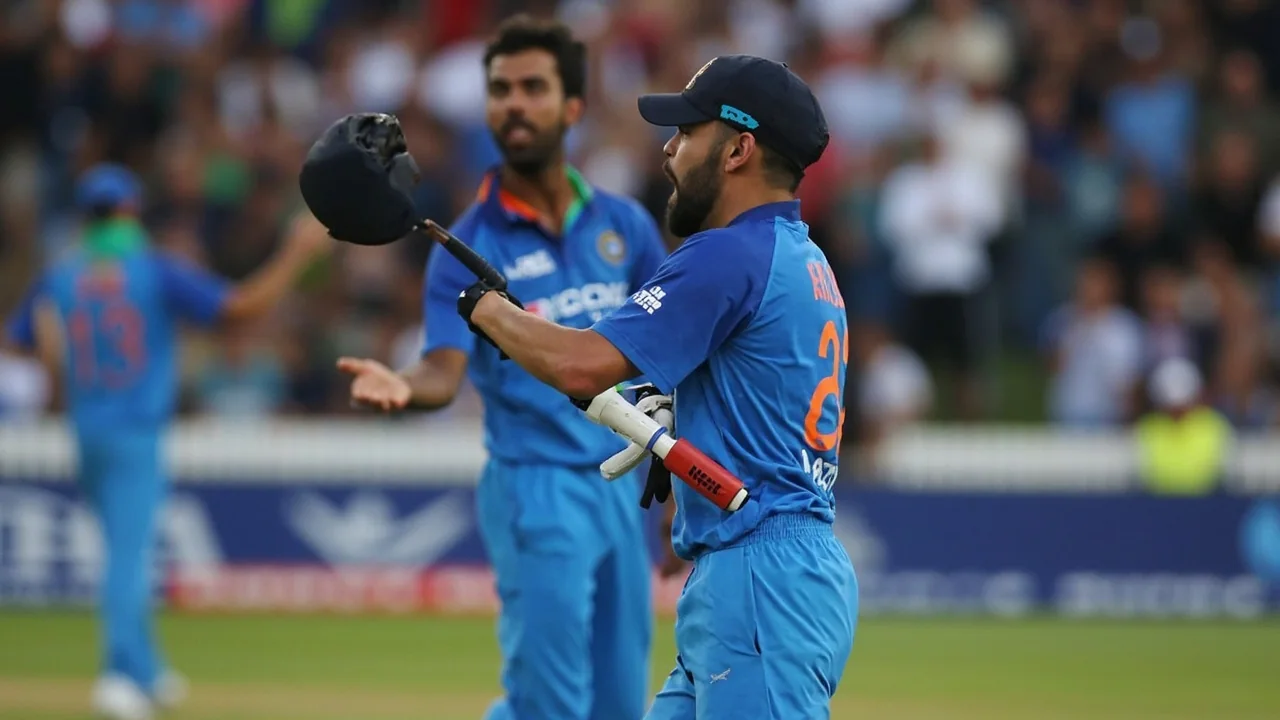
The Riverside Ground pitch on the eve of the opener was described as balanced: a good covering of grass on a dry English summer base, with enough moisture underneath to give the seamers a window in the first six overs and enough dryness to rough up by the time the second innings began. The toss, in those conditions, was always going to favour chasing. History at this venue — both in List A cricket and in the franchise T20 games Durham have hosted — points to the chasing side winning more often than not, simply because the ball comes on more cleanly under lights than in the late afternoon sun, and the rough at the Lumley End develops enough to give spinners something to work with in the 12th to 16th over.
Brook and Iyer both understood the math. A first-innings total of 175 felt par; a score above 190 felt defendable only with disciplined death bowling. England's batting depth — Buttler, Brook, Bethell, Banton, Curran — suggested they would prefer to bat second and know what they were chasing. India's structure, with three left-handers through the top six, gave them the option of either approach, and Iyer's captaincy record in T20Is had been built around reading the surface in the first two overs.
How to watch the match live from India
For viewers in India, the broadcast route was the standard Sony network package that has carried India's white-ball cricket since the 2023 BCCI rights cycle. Sony Sports Network ran the live television broadcast across its standard-definition and high-definition channels, with English-language commentary. The streaming path was Jio Hotstar — both the mobile app and the web player — with Hindi and English audio options, ball-by-ball data overlays, and the same camera feed that went out on television. Ball-by-ball commentary in regional languages ran on the All India Radio cricket service and on most major Indian sports apps throughout the evening.
Fantasy contests on Exchange22 locked 30 minutes before the official toss, as the app does for every international fixture. For players building their team through the afternoon, the key tactical read was which side Brook would bowl first if he won the toss — England's preference had been to chase on this surface, but a green pitch would have flipped that math. The Riverside Ground outfield was dry and the lights were ready; the only question was the coin.
Why the opener mattered beyond this one result
The series carried weight beyond the table. For India, the T20I leg was the first assignment of the white-ball cycle after the new BCCI central contracts were announced, and the squad had been picked specifically to test the depth chart that would take the field at the next T20 World Cup. Abhishek Sharma, Tilak Varma and Suryavanshi were all pushing to lock in their spots ahead of the home series later in 2026; Shivam Dube and Axar Patel were holding their places against the next wave of seam-bowling all-rounders; and Arshdeep Singh was one more strong performance away from being the undisputed first-choice new-ball bowler in the format.
For England, the series was about resetting after the Test disappointment without burning out the seam group that has been the foundation of their red-ball rebuild. Brook's appointment as T20I captain was a statement that the white-ball side needed a younger voice in the changeroom, and the way the side handled the chase — or the defence — at Chester-le-Street would tell the selectors whether the leadership handover had been the right call. The Test defeat to New Zealand could be filed away as a bad week; a T20I loss at home to India would have been harder to explain.
Both squads travelled to the next venue the morning after the opener, with the second T20I scheduled for Old Trafford and the third at Edgbaston the following week. The Riverside result would have set the tone for the rest of the series, but the larger tests — Iyer's middle order under scoreboard pressure, Brook's captaincy with a red-ball hangover, the new-ball duel between Archer and Arshdeep — would play out across all three matches. For fantasy players, that meant contest math on Exchange22's live matches hub stayed alive long after the lights went out in Durham.
Frequently asked questions
Where was the England vs India 1st T20I of 2026 played?
It was played at the Riverside Ground in Chester-le-Street, Durham, on Wednesday 1 July 2026, with a 10:00 PM IST start under lights for Indian viewers.
Who captained England and India in the 1st T20I?
Harry Brook captained England with Jos Buttler as wicketkeeper, and Shreyas Iyer led India in the T20I leg with a young top order around him.
How did England arrive at the 1st T20I?
England came in having lost the third Test against New Zealand on Monday 29 June 2026, leaving the squad with a red-ball hangover and a one-day turnaround before the T20I opener.
What were the predicted playing XIs?
Predicted England XI: Phil Salt, Jos Buttler (wk), Harry Brook (c), Jacob Bethell, Tom Banton, Sam Curran, Will Jacks, Jofra Archer, Luke Wood, Saqib Mahmood, Adil Rashid. Predicted India XI: Abhishek Sharma, Vaibhav Suryavanshi, Ishan Kishan, Shreyas Iyer (c), Tilak Varma, Shivam Dube, Axar Patel, Ravi Bishnoi, Harshit Rana, Arshdeep Singh, Prince Yadav.
How could Indian viewers watch the match live?
Live broadcast in India was on the Sony Sports network, with streaming on the Jio Hotstar app and website.
What was the head-to-head T20I record going in?
India led the T20I head-to-head 18-12 across 30 completed matches, with no no-results in the published ledger going into the 2026 opener.