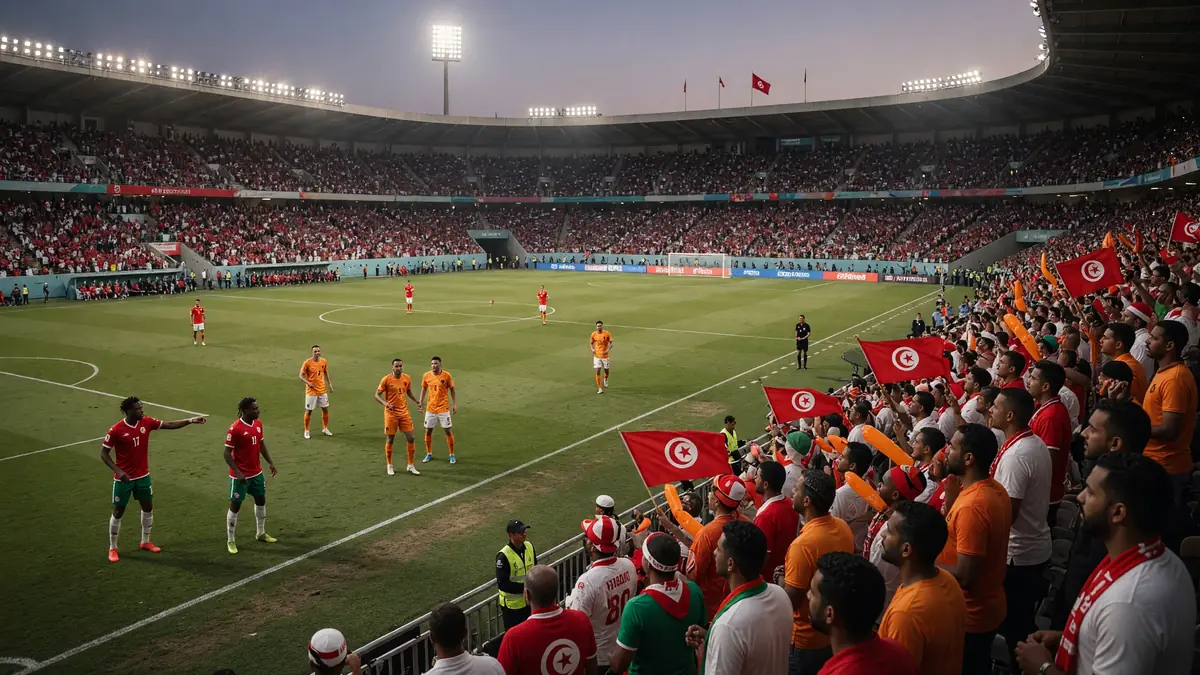
By late June 2026 the World Cup group stage had already sorted Group F into two very different stories. The Netherlands, ranked eighth in the world as of 11 June under Ronald Koeman, arrived in Kansas City off a 5-1 thrashing of Sweden and a 2-2 draw with Japan. Tunisia, unbeaten through qualifying and without a goal conceded in that campaign, had already been knocked out after a 5-1 loss to Sweden and a 4-0 loss to Japan. LatestLY's Dream11 preview, published on the evening of 25 June, treated the 26 June Arrowhead fixture as a Dutch-heavy fantasy slate rather than a competitive two-way contest — and the captaincy call followed that read.
How the Group F ledger looked before kick-off
The form lines on the preview were blunt. Tunisia sat on L-L-D-L-L. The Netherlands sat on W-D-W-L-D. Those five-match windows matter more in a World Cup group than they do in a long league season, because sample size is tiny and every result reshapes qualification math overnight. Tunisia's two heavy defeats inside the group had already ended their tournament, which is the single most important fantasy fact on the slate: an eliminated side often rotates, protects minutes, or simply plays with less urgency than a side still chasing a top-two finish.
The Netherlands, by contrast, had announced themselves against Sweden with a five-goal win and then shared four goals with Japan. That sequence is why Koeman's side carried both ceiling and floor into Kansas City. A team that can score five against a European side and still find the net twice against Japan is the kind of attacking unit fantasy managers stack from. The global ranking of eighth as of 11 June 2026 was the background noise; the recent scorelines were the signal.
Arrowhead Stadium and the fantasy frame for a Dutch stack
GEHA Field at Arrowhead Stadium in Kansas City is better known as an American football venue, but for this World Cup group fixture it was simply a large, loud bowl with a full-size pitch and a night-match atmosphere. The LatestLY preview did not turn the venue into a microclimate lecture. It treated the ground as a stage for a favourite against an eliminated opponent, which is the right level of detail for a Dream11 build. When one side is already out and the other is still shaping a group finish, the fantasy problem is ownership concentration and captaincy leverage, not whether the surface plays like a tight European pitch.
That frame pushed managers toward Dutch attackers and progressive midfielders first, then toward Dutch defenders who could still bank clean-sheet and bonus points if Tunisia's front line stayed blunt. Tunisia's qualifying shutout record was real, but it had already been broken twice in the group. Fantasy managers who still priced Tunisia as a low-scoring defensive side were fighting the most recent evidence.
Cody Gakpo as captain, Memphis Depay as vice-captain
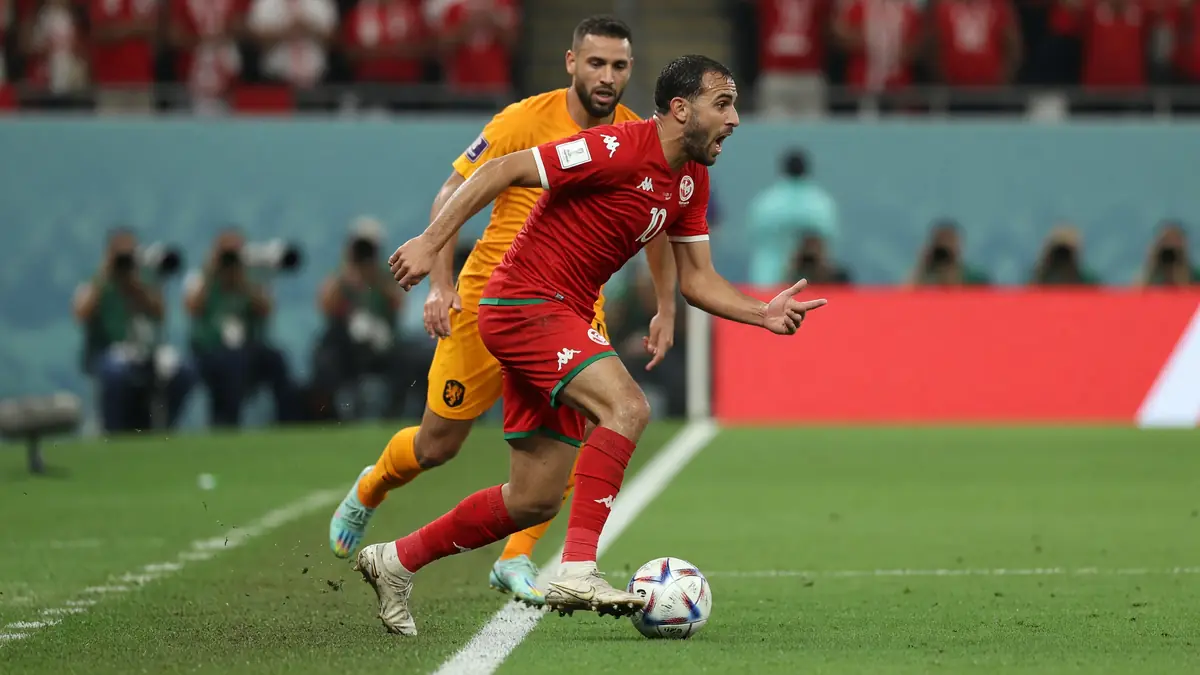
The preview's captain pick was Cody Gakpo, locked in after a brace against Sweden. That is a clean fantasy logic chain: recent multi-goal output, a starting role in a 4-3-3, and an opponent already eliminated. In Dream11 football formats, the captain multiplier is usually best spent on a forward or attacking midfielder who has both shot volume and a realistic route to multiple returns. Gakpo fit that profile more cleanly than a pure centre-forward or a deep-lying creator on this particular slate.
Memphis Depay was named vice-captain. The pairing is coherent rather than decorative. Depay supplies the central finishing threat and penalty-adjacent upside; Gakpo supplies the wide-channel creation and recent goal evidence. If Gakpo blanked, Depay still offered a path to a usable 1.5x return. If both returned, the Dutch-heavy team would jump ownership boards in small leagues. The preview did not invent a third captaincy name to sound clever. It stayed with the two attackers most likely to convert Dutch territorial dominance into fantasy points.
The predicted XIs that shaped the build
LatestLY listed Tunisia in a 4-3-3: Aymen Dahmen in goal; Yan Valery, Montassar Talbi, Yassine Meriah and Ali Abdi across the back; Ellyes Skhiri as captain in midfield with Ferjani Sassi and Hannibal Mejbri; Elias Achouri, Hazem Mastouri and Anis Ben Slimane in the front three. That shape is balanced on paper, but the personnel were walking into the fixture after two heavy group defeats. Skhiri remained the one Tunisia name with genuine differential appeal because a holding midfielder can still bank tackles, interceptions and pass-completion crumbs even when the attack is quiet.
The Netherlands were also listed in a 4-3-3: Mark Flekken; Denzel Dumfries, Matthijs de Ligt, Virgil van Dijk as captain, and Nathan Aké; Frenkie de Jong, Teun Koopmeiners and Tijjani Reijnders in midfield; Cody Gakpo, Memphis Depay and Donyell Malen up front. That is a fantasy-friendly spine. Van Dijk anchors the back line, Dumfries and Aké add overlapping or progressive defensive returns, and the midfield three mixes control (de Jong), box arrival (Koopmeiners) and transition threat (Reijnders). Malen as the third attacker gave managers a third Dutch forward route if they wanted to overload the final third rather than spend budget on Tunisia attackers.
Core differentials: de Jong, Reijnders, Skhiri and the Dutch defence
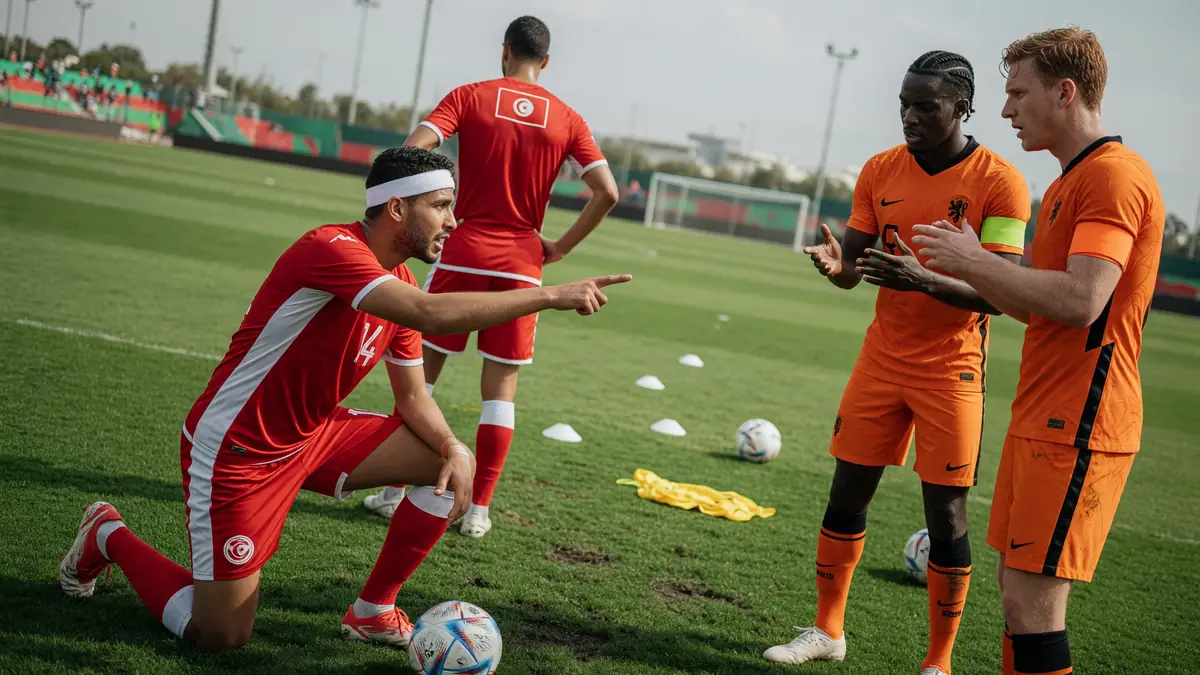
Beyond the captaincy pair, the preview highlighted Frenkie de Jong, Tijjani Reijnders, Ellyes Skhiri and Dutch defenders Virgil van Dijk, Denzel Dumfries and Nathan Aké. That list is a map of where ownership was expected to thin out. Most managers would still load Gakpo and Depay. Fewer would spend premium midfield budget on both de Jong and Reijnders, and fewer still would build a three-man Dutch defensive shell when attacking returns looked easier.
De Jong's value sits in progressive passing and match control against a side that may sit deep. Reijnders offers a more direct goal threat from midfield, which is why he works as a grand-league pivot when managers already have Gakpo locked as captain. Skhiri is the Tunisia counterweight: if the contest stayed tighter than the form lines suggested, the home-side captain in a defensive midfield role could outscore a quiet Dutch attacker. Van Dijk, Dumfries and Aké formed the clean-sheet and bonus cluster. Against an eliminated Tunisia attack, one or two of those defenders were reasonable cash-game anchors rather than pure differentials.
How a cash team and a grand-league team split on this slate
A cash-oriented Dream11 build on this preview would look Dutch-heavy without becoming reckless: Gakpo captain, Depay vice-captain, one of van Dijk or Dumfries for defensive floor, de Jong for midfield control, and maybe one Tunisia piece — usually Skhiri — if the salary cap forced a non-Dutch filler. The logic is ownership-safe. When one side is a clear favourite and the other is already eliminated, cash contests punish the manager who chases an unlikely Tunisia goal scorer at the expense of Dutch minutes.
A grand-league build could stretch further. Reijnders as a second Dutch midfielder, Malen as a third Dutch attacker, or Aké instead of van Dijk for a cheaper defensive route all create room to differentiate. The risk is correlated blanks: if the Netherlands scored only once and the returns concentrated in a single name, a triple-Dutch-attack stack can finish behind a simpler Gakpo-Depay core. The preview's differential list is useful precisely because it tells managers where to take one calculated risk rather than five.
What Tunisia's collapse changed for fantasy managers
Tunisia's qualifying story had been excellent: unbeaten, no goals conceded. Inside the World Cup group, that reputation evaporated after Sweden 5-1 and Japan 4-0. Fantasy managers who still built around Tunisia's defensive reputation were a full tournament phase behind the data. The correct retrospective read is not that qualifying form never matters. It is that World Cup group evidence updates faster than reputation, and by 25 June the update was already complete.
That is also why the predicted Tunisia XI still mattered. Even on a Dutch-favoured slate, managers needed names for the mandatory away-side slots. Achouri and Ben Slimane offered the more progressive wide options; Mastouri was the central outlet; Skhiri remained the steadiest all-format Tunisia pick. None of those names overturned the captaincy call. They only filled the minimum Tunisia allocation without wrecking the Dutch engine.
What the LatestLY preview actually established
The source for this retrospective is LatestLY's Dream11 prediction article for Tunisia vs Netherlands in FIFA World Cup 2026 Group F, published at 7:15 PM IST on 25 June 2026. The verified facts carried from that preview are limited and concrete: the fixture was listed for 26 June 2026 at GEHA Field at Arrowhead Stadium in Kansas City; the Netherlands entered after Sweden 5-1 and Japan 2-2, ranked eighth as of 11 June under Ronald Koeman; Tunisia were already eliminated after Sweden 5-1 and Japan 4-0 despite an unbeaten, clean-sheet qualifying campaign; recent form was Tunisia L-L-D-L-L and Netherlands W-D-W-L-D; the predicted Tunisia XI was the 4-3-3 listed above with Skhiri as captain; the predicted Netherlands XI was the 4-3-3 listed above with van Dijk as captain; Dream11 captain was Cody Gakpo after his Sweden brace, with Memphis Depay as vice-captain; core differentials included de Jong, Reijnders, Skhiri, van Dijk, Dumfries and Aké.
Everything beyond those facts here is structure and fantasy interpretation for readers who still study old World Cup group slates when building multi-sport habits. The preview was not a full tactical dossier. It was a captain-and-XI note written for managers locking teams on a favourite-versus-eliminated matchup.
Why this Group F slate still matters on a fantasy desk
World Cup group games against already-eliminated sides are a recurring fantasy pattern, not a one-off curiosity. The Arrowhead fixture is a clean case study in how to weight recent tournament evidence over older qualifying narratives, how to spend the captain multiplier on the attacker with the freshest multi-return proof, and how to use defenders and holding midfielders as floor pieces rather than as the main bet. Gakpo-as-captain was not a stylish choice. It was the shortest path from the Sweden brace to a 2x slot against a side that had just shipped nine goals in two matches.
For multi-sport readers who mainly play cricket contests, the transferable lesson is simple: when one side's tournament is over and the other side is still scoring freely, stack the live side, captain the attacker with the clearest recent haul, and treat the eliminated side as salary relief plus one disciplined differential. That is the durable read from the 25 June 2026 LatestLY preview, and it is the reason the Dutch stack at Arrowhead still belongs in a fantasy archive rather than in a forgotten match note.
Frequently asked questions
When was the Tunisia vs Netherlands World Cup 2026 Group F fixture scheduled?
The LatestLY Dream11 preview, published on 25 June 2026, covered Tunisia vs Netherlands in FIFA World Cup 2026 Group F at GEHA Field at Arrowhead Stadium in Kansas City on 26 June 2026.
What form did Tunisia and the Netherlands bring into the fixture?
Tunisia's recent form was listed as L-L-D-L-L after a 5-1 loss to Sweden and a 4-0 loss to Japan, leaving them already eliminated. The Netherlands were listed W-D-W-L-D after thrashing Sweden 5-1 and drawing 2-2 with Japan, ranked 8th globally as of 11 June 2026 under Ronald Koeman.
Who was the Dream11 captain pick for Tunisia vs Netherlands?
Cody Gakpo was the Dream11 captain pick after a brace against Sweden, with Memphis Depay named vice-captain.
What predicted XIs did the preview carry?
Tunisia in a 4-3-3: Aymen Dahmen; Yan Valery, Montassar Talbi, Yassine Meriah, Ali Abdi; Ellyes Skhiri (C), Ferjani Sassi, Hannibal Mejbri; Elias Achouri, Hazem Mastouri, Anis Ben Slimane. Netherlands in a 4-3-3: Mark Flekken; Denzel Dumfries, Matthijs de Ligt, Virgil van Dijk (C), Nathan Aké; Frenkie de Jong, Teun Koopmeiners, Tijjani Reijnders; Cody Gakpo, Memphis Depay, Donyell Malen.
Which fantasy differentials did the preview highlight?
Core differentials included Frenkie de Jong, Tijjani Reijnders, Ellyes Skhiri and Dutch defenders Virgil van Dijk, Denzel Dumfries and Nathan Aké.
Why did Tunisia's qualifying form not carry into the World Cup group?
Tunisia had finished qualifying unbeaten without conceding a goal, but by the time of the Netherlands fixture they were already eliminated after heavy losses to Sweden and Japan.
Who coached the Netherlands at the 2026 World Cup group stage?
Ronald Koeman was listed as Netherlands coach, with the side ranked 8th globally as of 11 June 2026.
The 26 June 2026 Group F meeting at Arrowhead Stadium, framed a day earlier by LatestLY's Dream11 note, remains a compact study in favourite-side stacking: Gakpo on the armband after the Sweden brace, Depay behind him, and Dutch midfielders and defenders filling the rest of the board while Tunisia's eliminated status capped their fantasy ceiling. The original preview lives on LatestLY; the wider selection logic sits with the desk at Exchange22 Fantasy Tips & Winners.